
The signs of a poorly designed bike room are hard to miss. Bikes crammed together with tangled handlebars. Aisles too narrow to comfortably navigate, and vertical racks positioned too high for many users to reach. And increasingly, the unmistakable odor of lithium-ion batteries, which is a potential warning sign of overheating or improper charging in unventilated spaces.
As cities prioritize walkability and micromobility gains traction, the demand for high-density bike parking has exploded. Addressing that demand effectively requires more than squeezing in racks. It demands smarter layouts, secure infrastructure, and a user-centered approach that ensures every rider can access and safely use the space.
CycleSafe partners with facility planners, architects, and developers to reimagine the role of indoor bike parking. High-density solutions, when designed thoughtfully, can be both efficient and easy to use. Strategic planning and a balanced product mix make it possible to support high capacity without compromising anyone’s experience.
Why High-Density Bike Parking Matters
Across residential developments, office buildings, campuses, and transit hubs, bike parking is no longer an afterthought. Nationwide bike codes, first-mile/last-mile transportation goals, and the rise of multimodal commuting have made it a critical piece of modern infrastructure.
Additionally, today’s riders are also more diverse than ever. They’re parents with cargo bikes, commuters on eBikes, students hauling gear between classes. They expect safe, accessible, and smartly designed parking options that respect their time and investment.
Done right, bike rooms can:
- Increase parking capacity within limited square footage without sacrificing access
- Support a range of bike types and rider abilities
- Improve safety and security for users and property owners
- Align with sustainability, mobility, and micromobility goals
Designing for the Rider: Safety, Accessibility, and Ease of Use
A truly effective bike room starts with understanding who will use it. Will riders be storing bikes for hours or days? Are most bikes standard commuters or electric and oversized models? Will users be expected to lift bikes overhead, or is that a barrier?
At CycleSafe, we recommend a “20% diversity rule”: plan for at least one-fifth of storage to accommodate non-standard bikes like eBikes, cargo bikes, or adaptive cycles. That means:
- Including horizontal or lower racks for heavier bikes
- Widening stall spacing to avoid handlebar clashes
- Offering mixed-height or assist-free options for accessibility
Lighting, wayfinding, and line of sight also play critical roles. A well-designed space should feel safe and intuitive. Multiple entry/exit points, wide aisles, and clear signage contribute to a bike room that encourages daily use.
Smarter Space Planning: Multi-Tier, Vertical, and Locker Solutions
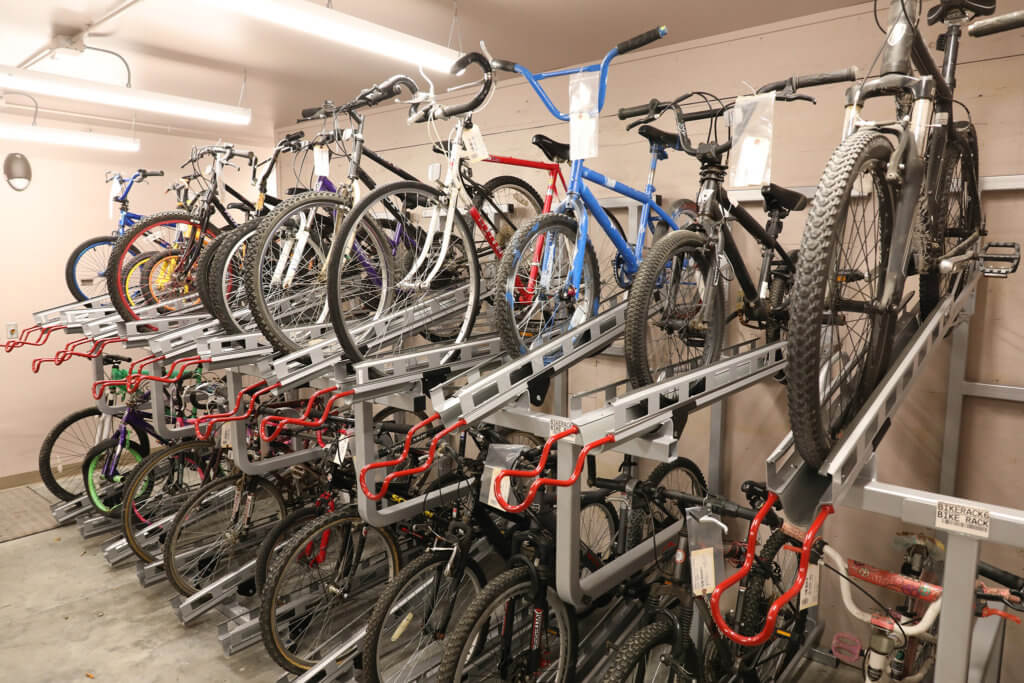
High-capacity doesn’t mean one-size-fits-all. In fact, relying on a single storage type often backfires. For example, stacking only vertical racks may alienate users who physically can’t lift their bikes. Multi-tier systems, when installed without proper spacing or consideration for circulation, can also introduce safety concerns, especially when tilting upper racks block aisles or interfere with clear paths of egress.
A combined approach addresses real-world needs. Consider:
- Multi-tier racks like CycleSafe’s QuadRack or OctoRack systems for efficient use of wall space
- Vertical wall racks with tire guards to protect finishes and simplify loading
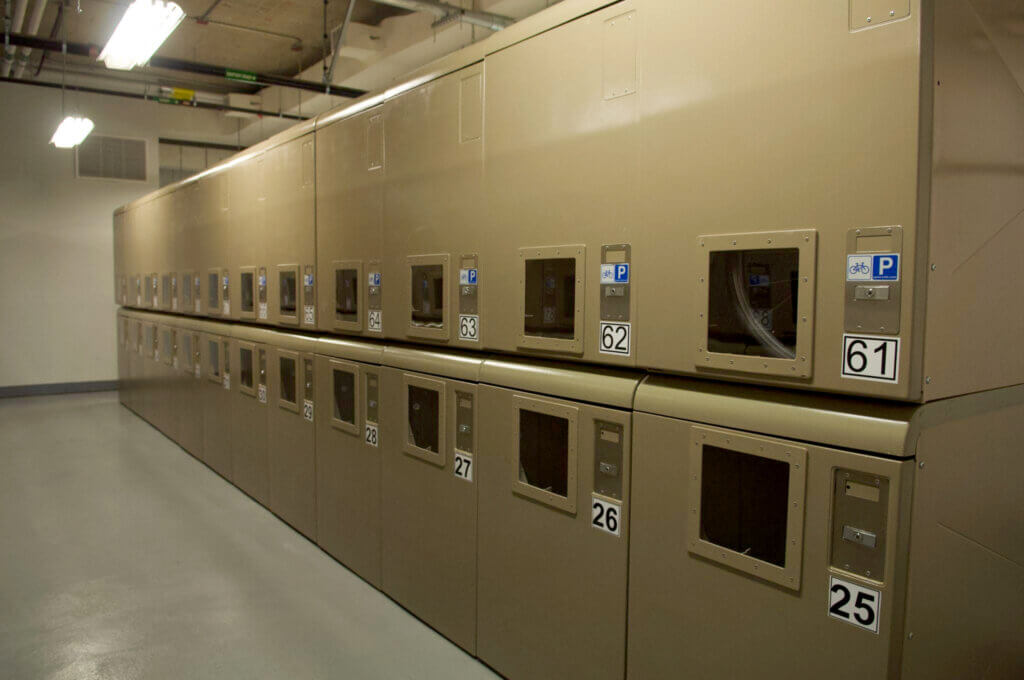
- Bike lockers for riders who need more security, weather protection (since not all bike rooms are indoors), or charging
- Rails or modular components that allow for maneuverability or future expansion as ridership grows
This mix not only supports different bike styles but also ensures the room can flex with changing usage patterns over time, all while preserving a compact, space-saving footprint.
eBike Charging & Battery Safety: Infrastructure, Not Improvisation
With eBike adoption skyrocketing, safe and convenient charging has become a must. But too often, the solution ends up being unsafe workarounds—extension cords, crowded outlets, or worse, in-residence charging.
Supporting eBikes safely starts with planning for both the electrical and physical infrastructure. That means sufficient, well-placed power access for a variety of parking formats, not just lockers.
Best practices include:
- GFCI outlets in ventilated, monitored charging areas
- Sufficient power supply and proximity of outlets to racked or stacked parking areas
- Clear circuit load planning and tamper-resistant installation
- Lockers with integrated charging and fire-suppressing construction (where available)
- Visible signage and clear user policies to promote compliance and reduce risk
CycleSafe’s locker systems are engineered for environments where security, durability, and charging safety all matter. The fully enclosed design limits exposure to theft, tampering, and weather, while optional integrated charging supports fire risk mitigation in compliance-conscious spaces. Within a well-planned layout, lockers enhance both function and confidence, meeting the evolving expectations of both planners and riders.
Avoiding Common Pitfalls in Bike Room Design
Even well-intentioned bike rooms can fall short without strategic planning. Some of the most common missteps include:
- Designing for maximum density, not for the actual rider experience
- Over-reliance on vertical or horizontal racks without alternatives
- Ignoring charging infrastructure or fire safety needs
- Narrow aisles that prevent comfortable bike maneuvering
- Lack of multiple user paths or clear points of egress, creating dead ends or tight corners
- Lack of clarity around who manages, maintains, or monitors the space
A better bike room starts with better questions—not just how many bikes can fit, but what kind of space will users want to return to? Prioritizing smarter layout and inclusive infrastructure makes the difference for adaptation and use.

CycleSafe’s Approach: Designed Around Real People, Not Just Products
At CycleSafe, we’ve spent more than four decades helping facilities turn their bike rooms into assets, not liabilities. Our process starts with understanding the users, the building, and the broader transportation goals. Then we tailor a solution that’s durable, intuitive, and easy to maintain.
From our high-density OctoRack to our flagship lockers, we offer flexible, low-maintenance systems that are built to perform. And we back it with consultation, layout planning, and the insight that only comes from years of hands-on experience. Whether building a new development, retrofitting an existing space, or responding to changing local codes, our team is ready to help.
Build Smarter Bike Rooms with CycleSafe
High-density doesn’t have to mean high compromise. CycleSafe helps design secure, space-saving, and user-friendly bike rooms that support modern micromobility and adapt to the real needs of diverse communities.
- Learn more about high-density bike parking and storage
- Browse high-density bike room product options
- Talk to a Bike Room Specialist
A well-designed bike room does more than hold bikes. These spaces aren’t just functional; they’re foundational to supporting healthier habits, better infrastructure planning, and a more connected future.
So, whether you’re building a new development, retrofitting an existing space, or responding to changing local codes, our team is ready to help. Talk to our team today if your goal is to create smarter, safer, and more adaptable bike infrastructure.
