
Redefining “Smart” with Micromobility & Mobility Hubs
In today’s evolving urban landscape, the term “smart city” refers not only to technological sophistication but also to integrated, responsive, and sustainable infrastructure. At the heart of this evolution is micromobility—bicycles, scooters, and light electric vehicles—delivering on the promise of flexible, low-carbon urban travel. And nowhere is this promise more fully realized than in the rise of mobility hubs: co-located centers where multiple modes of transportation converge, creating seamless access to transit, bike parking, and shared mobility services.
Smart micromobility infrastructure begins with an often-underappreciated component: bike parking. When made modular, secure, connected, and digitally accessible, bike parking ceases to be a passive amenity and becomes a core element of urban mobility strategy. Whether positioned near light rail stations, bus interchanges, or universities, these solutions allow commuters to transition quickly and confidently between modes—what planners call “last-mile” efficiency.
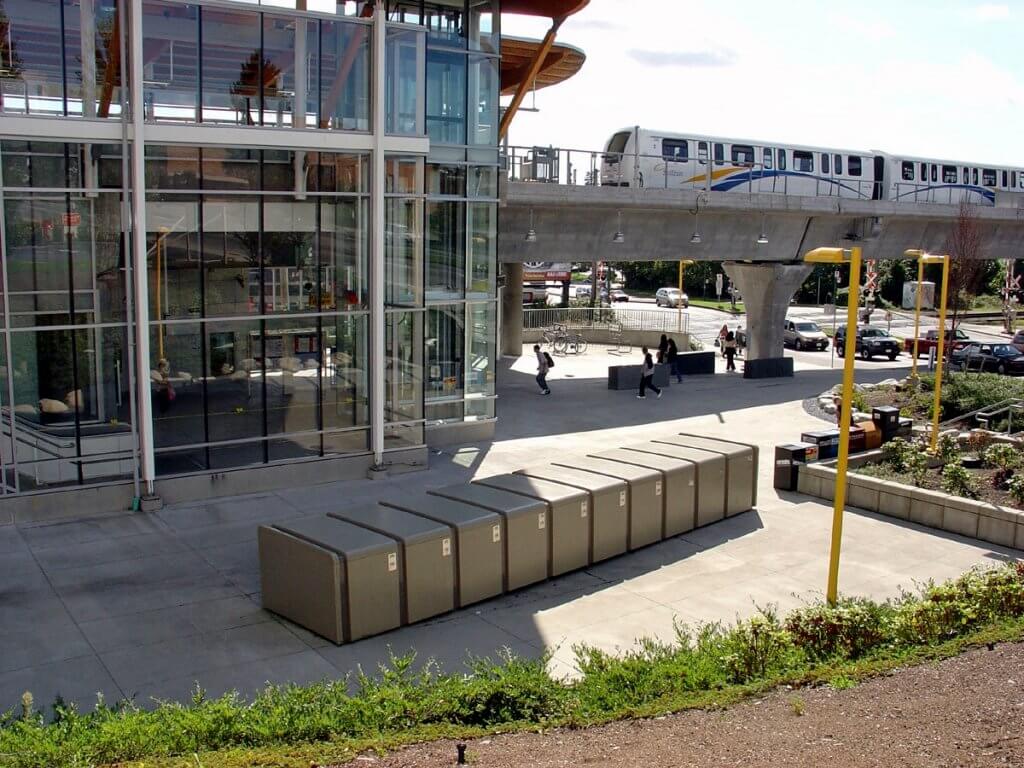
Mobility hubs provide a powerful organizing principle for planners. They guide where infrastructure should concentrate—at nodes of high demand—and they elevate the role of bike lockers, racks, and shelters from ancillary to essential. Integrated within apps and transit systems, smart parking solutions offer more than theft protection—they provide data, predict demand, and help municipalities manage limited curb and site space effectively.
This article examines what makes bike parking truly “smart,” from user access systems to data-driven decision making. It also explores how mobility hub thinking influences placement, design, and integration strategies—and how cities can use unified platforms to reduce system sprawl, maximize ROI, and deliver user-friendly, sustainable transportation.




























What Makes Bike Parking ‘Smart’?
Smart Bike Parking™ refers to infrastructure equipped with digital, connected, and modular technologies that improve security, usability, and operational efficiency. This includes:
- Connected systems: Integration with cloud platforms, transit apps, and bike share programs
- Secure lockers: Theft-resistant, weather-protected storage for personal or rented bikes
- Modular design: Scalable installations that adapt to varying site demands
- Durable materials: Low-maintenance construction with decades-long lifespans
- User-friendly access: Credentialed entry via mobile app, cards, keypad, or Bluetooth
- Charging accommodation: In-locker power outlets and dedicated charging docks that support on-site eBike and eScooter charging
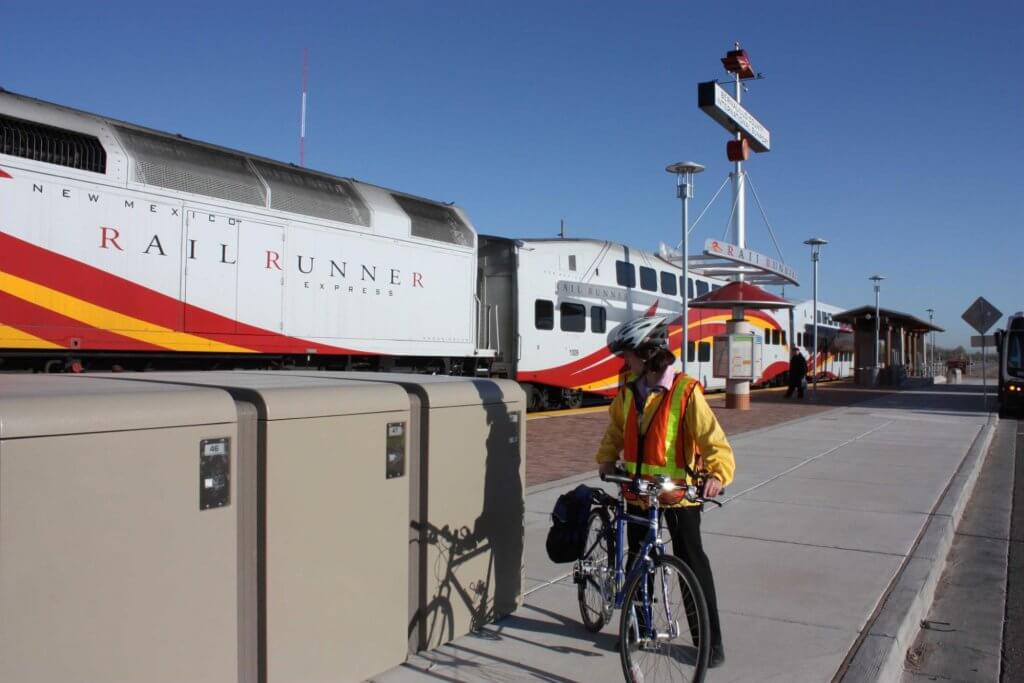
CycleSafe’s ProPark® lockers exemplify this standard, combining modular strength with multiple cloud-based digital-access technologies—including cellular Bluetooth, RFID, and WiFi-enabled doors and locks—making them an ideal solution for mobility hub deployments.
Key Design & Operational Considerations
For planners, Smart Bike Parking must meet stringent standards of performance, usability, and longevity. Among the top considerations:
- Security: Full-length latch systems, heavy-duty concealed hinges, and tamper-proof locking mechanisms
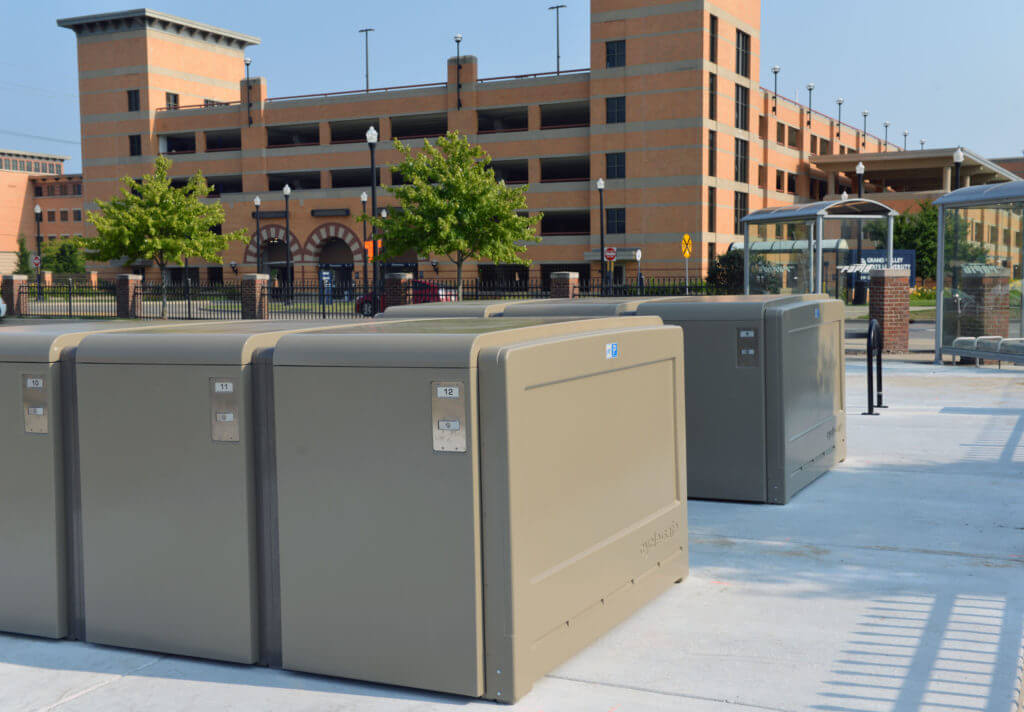
- Maintenance & durability: Sheet-molding compound fiberglass (SMC) panels, like those used by CycleSafe, provide decades of impact resistance, UV protection, and graffiti resistance
- Data & usage analytics: Smart lockers track utilization rates, enabling predictive planning and capacity optimization
- Scalability: Modular units simplify expansion or relocation based on demand
- Safe charging placement: In-locker outlets or dedicated charging docks that let riders charge eBikes and eScooters outdoors rather than in dorm rooms, offices, or apartments
Planner Pain Points & Concerns
Despite its promise, integrating bike parking into micromobility hubs presents real challenges to municipal decision-makers:
- System fragmentation: Multiple infrastructure vendors and platforms complicate integration
- Budget constraints: High upfront costs require lifecycle ROI justification
- Interoperability issues: Systems must work across transit and micromobility networks
- Site limitations: Urban real estate is constrained, requiring compact, adaptable solutions
Planners often prioritize systems that are vendor-agnostic, standards-compliant, and capable of interoperating with broader smart city platforms.
Seamless Integration with Transit Ecosystems
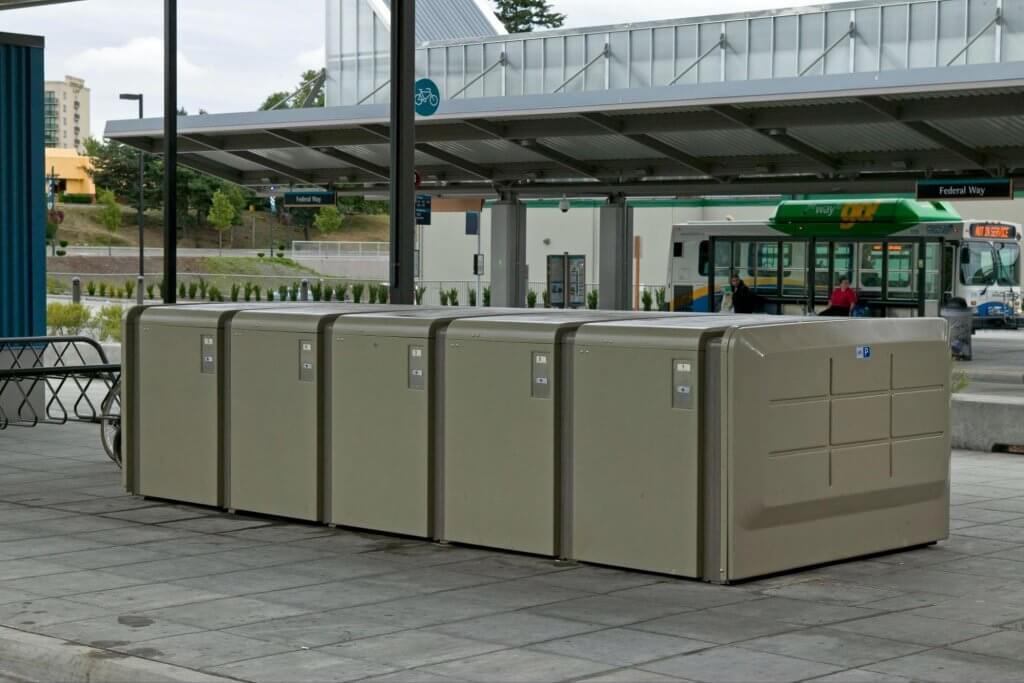
Mobility hubs are most effective when they unify transportation modes under a shared system architecture. Smart Bike Parking must:
- Work with transit apps: Support single sign-on, trip planning, and payment integration
- Support flexible credentialing: From QR code to keycard, users expect seamless access
- Enable multimodal journeys: Park a personal bike, rent a scooter, or access a bus all within one platform
Cities like Minneapolis, and Montreal are experimenting with mobility hubs that combine secure bike lockers, shared scooters, and transit shelters within a unified ecosystem—maximizing space and user convenience.
Technology & Interoperability Needs
To keep platforms minimized and integration maximized, cities must prioritize:
- Open APIs: Ensure vendors can plug into existing city systems
- Credential interoperability: Allow transit cards, mobile apps, or even mobile wallets to unlock lockers
- Cloud-based management: Provide planners with remote diagnostics, asset tracking, and analytics dashboards
- Contactless Payments: Support tap-to-pay, mobile wallet, or app-based payment systems—eliminating the need for cash handling or physical payment kiosks.
CycleSafe’s electronic access systems are already compatible with many of these technologies, providing flexibility in configuration and deployment.
Real-World Examples & CycleSafe Relevance
The City of London, Ontario implemented CycleSafe Bluetooth-enabled lockers near its downtown transit corridor, enabling riders to park securely and access lockers through mobile apps. Banks of ProPark bike lockers were easily moved to accommodate construction and in response to usage needs.
The city of Denver offers another example of integrating CycleSafe’s Smart Bike Parking™, locating modular, digital access ProPark® bike lockers—including ones configured for cargo bikes—on its A Line in Central Park.
In Medicine Hat, Alberta, riders didn’t feel confident locking their bikes downtown, and the city didn’t have the infrastructure in place to change that. The city installed CycleSafe’s ProPark system lockers to provide app-based secure parking for bikes and a digital platform to manage the system remotely, adjust pricing, and track usage.
Meanwhile, to date, CycleSafe lockers in Ann Arbor have been in continuous service for nearly 50 years now, with minimal maintenance—proving that smart infrastructure can also be durable.
CycleSafe’s news section further showcases integrations with universities, health campuses, and corporate sites—each deploying lockers as part of broader, multimodal mobility hubs.
From Smart Parking to Smarter Cities
Smart Bike Parking™ isn’t just about locking bikes; it’s about unlocking mobility. For cities striving to meet climate goals, reduce congestion, and support car-free lifestyles, integrated, connected, and modular bike parking solutions are no longer optional. They are the foundation of next-generation mobility hubs and the backbone of a truly smart transportation system.
Forward-thinking municipalities must invest in systems that not only secure bikes but also generate data, support seamless travel, and scale with demand. For those goals, solutions like CycleSafe’s ProPark modular locker system offer a clear path forward—where smart infrastructure meets sustainable urban mobility.
