
Secure, Scalable Infrastructure for Guests, Staff, and Cycling Destinations
The Growing Role of Bike Parking in Hospitality
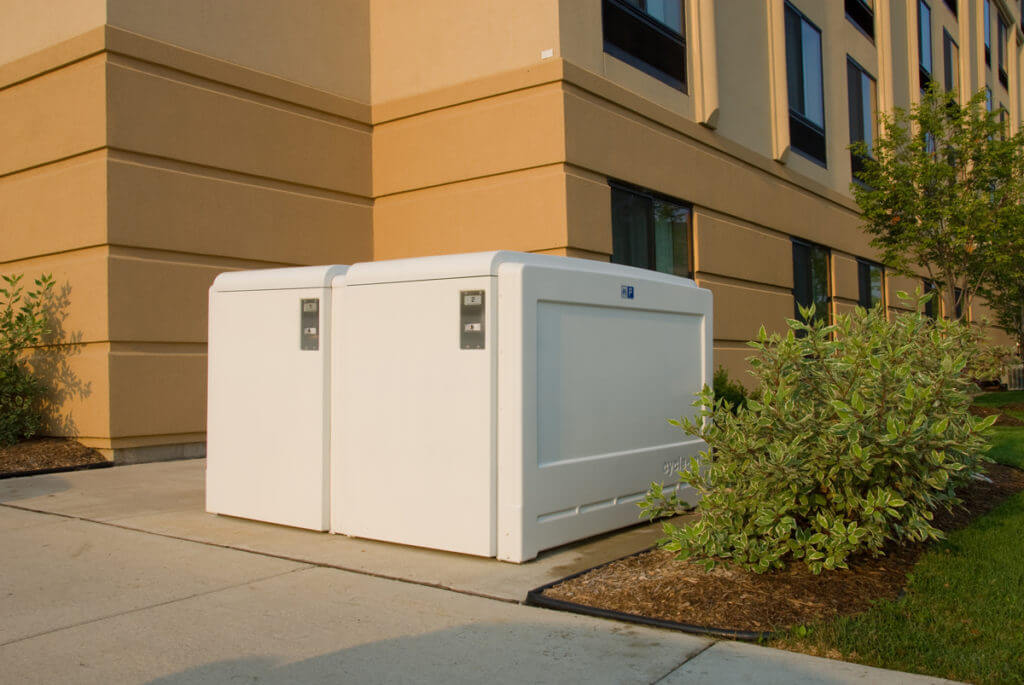
Cycling tourism continues to expand across North America, driven by e-bikes, destination trail systems, and active travel. As more guests arrive with high-value bicycles, expectations around secure, convenient bike parking are rising—those expectations are increasingly influencing where cycling-oriented and active-travel guests choose to stay.
Hotels that recognize this shift are beginning to treat bike parking not as a secondary amenity, but as a core part of the guest experience and a meaningful competitive differentiator, driven by both rising guest expectations and real operational pressures within hospitality environments.
For many properties, this reflects a broader realization: bike parking is not just a convenience, but an operational and business decision that influences staff workflows, risk exposure, and overall property positioning.
Hotels and hospitality properties typically begin evaluating bike parking solutions when specific operational or strategic pressures emerge. These may include repeated guest requests for secure storage, bikes being brought into rooms or public areas, growing demand from cycling travelers or eBike users, or increasing operational friction related to unmanaged bike behavior.
In other cases, evaluation is driven by planning and development factors, such as proximity to trail systems or destination cycling routes; new development or renovation projects where bike parking must be integrated into overall site design; sustainability and green building initiatives—including pursuit of LEED credits, BREEAM certification, or other environmental performance standards; or code and zoning requirements that mandate both short-term and long-term bicycle parking.
Turn passing riders into loyal guests by offering the secure, convenient bike parking today’s cyclists actively seek.
For larger hotels and resorts, the implications are operational: bikes entering guest rooms, disruption to housekeeping workflows, increased wear on interiors, and growing liability concerns. These challenges also introduce increased risk exposure, including theft of high-value bicycles, liability related to improper storage or unmanaged eBike charging, and inconsistent handling of guest property across staff and shifts.
For smaller properties—such as lodges, bed and breakfasts, and boutique cycling-focused accommodations—the implications are strategic. These properties are actively positioning themselves as cycling-friendly destinations, where the quality of amenities directly influences bookings, reviews, and reputation within cycling communities.
In both cases, bike parking is no longer incidental—it is a core operational and guest-facing system that directly impacts guest satisfaction, operational efficiency, and long-term positioning.
In some municipalities, these requirements are formalized. Cities such as Boston and Vancouver require both short-term and long-term bicycle parking, with defined standards for security, accessibility, and capacity.
Discuss your project and your specific needs with an expert.
Delivering Value Across Different Hospitality Models
Bike parking decisions are not one-size-fits-all. The role it plays—and the way it creates value—varies significantly depending on property type, scale, and operational priorities.
Understanding these differences is critical to selecting solutions that perform effectively across both guest experience and operations. In practice, these decisions are evaluated differently across stakeholder groups. Ownership and developers often focus on long-term asset value, lifecycle cost, and competitive positioning. Operations teams prioritize ease of use, consistency, and minimizing guest-related friction. Facilities teams are concerned with durability, maintenance requirements, and long-term performance, while security and risk stakeholders focus on theft prevention, controlled access, and liability reduction.
Larger Hotels, Resorts, and Multi-Property Portfolios
For developers, ownership groups, and operators:
Bike parking is a long-term capital and operational decision that must balance:
- Guest experience
- Operational efficiency
- Lifecycle cost
Facilities teams prioritize durability and maintenance reduction, while architects and Division 10 specifiers must integrate systems into site and building design without compromising space or usability.
Smaller Cycling-Focused Properties (Lodges, Inns, B&Bs)
For owner-operators and boutique properties:
Bike parking is a brand and revenue driver that directly influences:
- Booking decisions
- Guest satisfaction
- Positioning within cycling tourism networks
In these environments, secure and thoughtfully designed bike storage is not just functional, it is part of the experience being sold and a key factor in attracting cycling-focused guests.
A Complete Bike Parking System for Hospitality Properties
Hotels and hospitality properties must accommodate multiple user types, each with different needs, expectations, and patterns of use. Designing bike parking as a single solution often leads to gaps in usability, underutilized systems, or operational friction.
A more effective approach is to think in terms of a coordinated system—one that aligns the right type of bike parking solution with the specific use case and location within the property.
This includes:
- Overnight guests with high-value bikes
- Short-term visitors
- Employees and staff
The most effective systems combine multiple solution types:
- Secure bike lockers for long-term storage
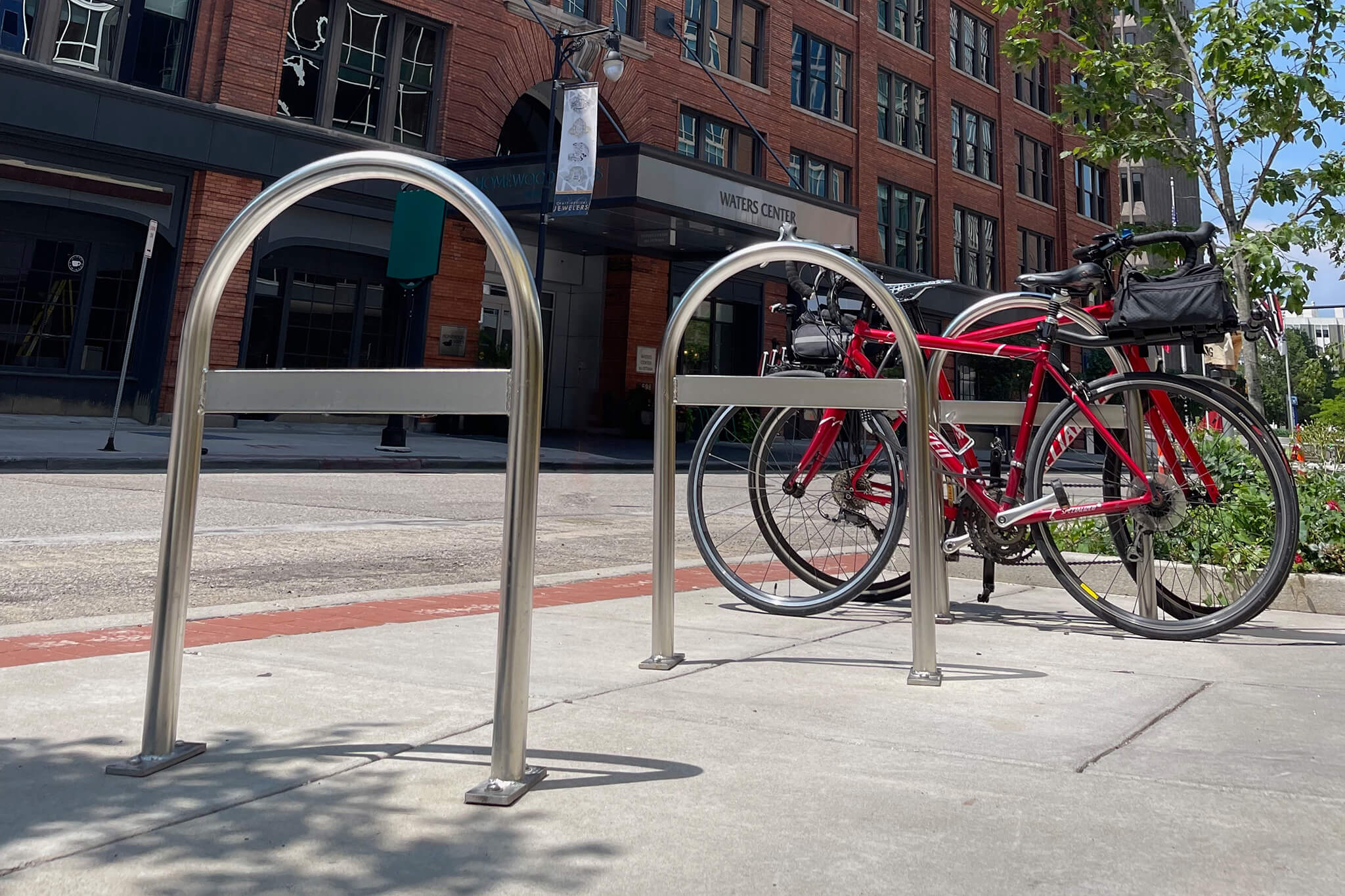
- Bike racks for short-term, high-visibility parking
- Covered shelters for weather protection
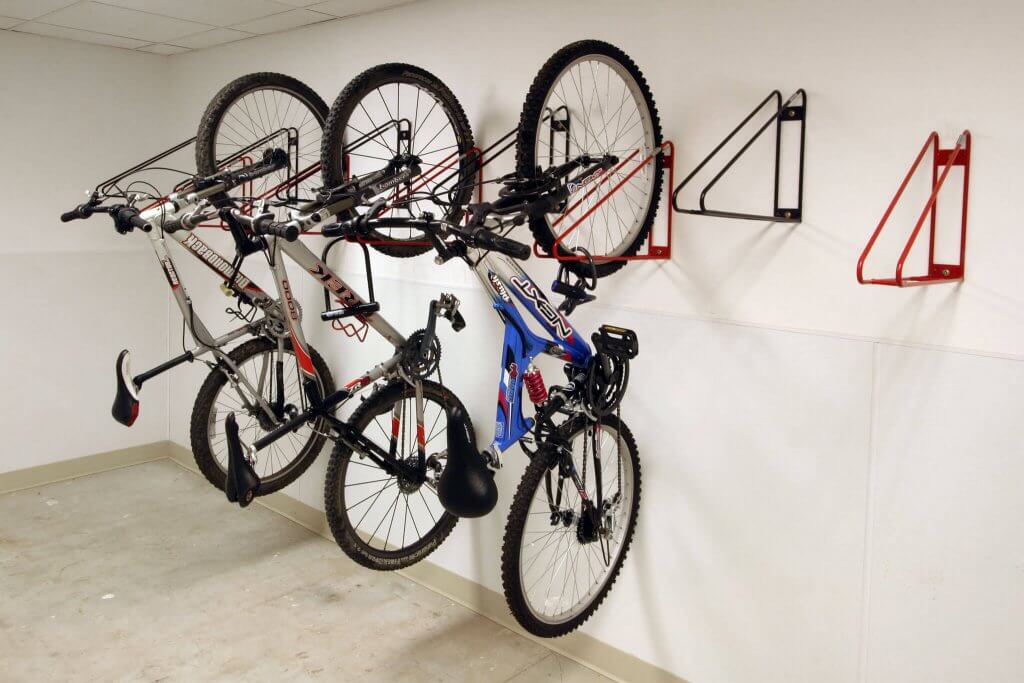
- Indoor bike rooms for high-capacity or premium amenity environments
- High-density systems for constrained spaces
- Solutions designed for e-bikes, cargo bikes, and specialty bicycles
By taking a system-based approach, properties can deliver the right solution in the right location—whether supporting a 300-room hotel or a 12-room cycling lodge—while balancing guest experience, operations, and long-term performance.
Hospitality Use Cases
Guest Overnight Storage
Primary stakeholders: Operations, Facilities, Ownership / Owner-Operator
Problem: Guests bring bikes into rooms or other unintended areas, creating damage, liability, and operational disruption
Solution: Secure bike lockers with controlled or credentialed access
Impact: Improved guest experience, reduced liability, and operational consistency
For smaller properties, this also becomes a signature amenity that reinforces a cycling-friendly identity.
Entrances and Public Areas
Primary stakeholders: Operations, Brand, Guest Experience
Problem: Unstructured bike parking creates clutter and poor first impressions
Solution: High-quality, strategically placed bike racks
Impact: Organized, accessible parking aligned with brand standards
Work with CycleSafe to evaluate layouts, capacity, and system options for your property or development.

Parking Structures & Back-of-House Areas
Primary stakeholders: Facilities, Design Teams
Problem: Limited space reduces capacity and usability
Solution: High-density rack systems
Impact: Maximized capacity and improved space utilization
Resorts, Trail-Adjoining Properties, and Cycling Destinations
Primary stakeholders: Ownership, Marketing, Operations
Problem: Seasonal demand and high cycling volume create fluctuating needs
Solution: Scalable mix of lockers, racks, and shelters
Impact: Solutions that adapt to demand and strengthen destination positioning
Employee Bike Parking
Primary stakeholders: HR, Facilities, Operations
Problem: Lack of reliable storage discourages employee cycling
Solution: Dedicated racks or lockers
Impact: Improved employee satisfaction and support for sustainability initiatives
Designing for Today’s Cyclists
Modern cyclists bring a wide range of equipment, expectations, and security requirements, many of which extend beyond what traditional bike parking was designed to accommodate. For hotels and hospitality properties, this means bike parking must be thoughtfully planned to support not only convenience, but also usability, protection, and guest confidence.
Failing to account for these needs can lead to operational challenges, underutilized infrastructure, and dissatisfied guests. By contrast, well-designed bike parking solutions enhance the guest experience, support a broader range of cyclists, and ensure that infrastructure performs effectively over time.
- E-bikes require access to charging and secure, weather-protected storage, reflecting both their higher value and their role in longer-distance travel.
- In practice, this requires more than access to power—it requires infrastructure that allows bikes to be securely parked while charging. Dedicated eBike charging stations provide user-accessible, GFCI-protected outlets in secure dock configurations, supporting a wide range of personal charging systems while accommodating both indoor and outdoor installations.
- At the same time, integrated charging solutions within ProPark® System bike lockers, such as modular power kits with weather-protected electrical components, allow individual lockers to function as secure, enclosed charging environments. Together, these approaches enable properties to support eBike users without introducing operational complexity, while aligning charging access with broader goals around security, durability, and guest experience.
- Cargo bikes require additional space, wider access paths, and thoughtful layout to accommodate their size and maneuverability. Bike lockers for cargo bikes are also available.
- Fat tire bikes require compatible rack systems that properly support larger wheel sizes without damage or instability.
- High-value bicycles demand enhanced security, including controlled access, enclosed storage, or individual lockers.
Designing with these needs in mind ensures that bike parking infrastructure serves the full spectrum of today’s cyclists while aligning with operational, spatial, and guest experience priorities across hospitality environments.
Built for Long-Term Performance and Lifecycle Value
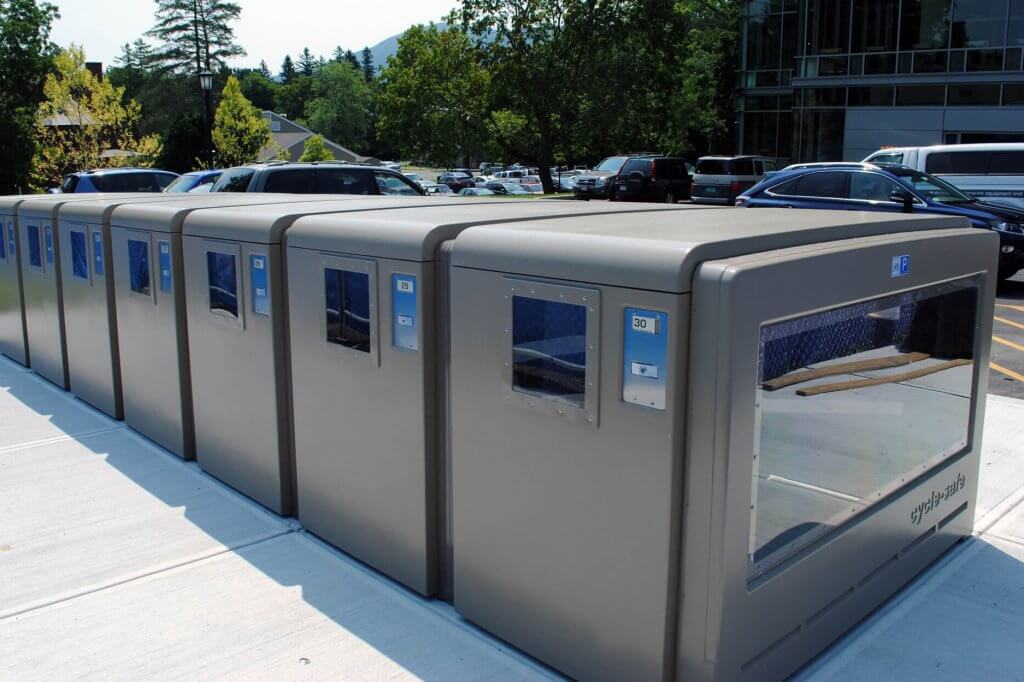
CycleSafe’s ProPark® System Bike Lockers are engineered for long-term performance, with a 45+ year lifespan and minimal maintenance requirements compared to metal alternatives that often require replacement within 10–15 years.
Their modular construction allows properties to scale and adapt over time. Locker banks can be expanded as demand grows, reconfigured across a property, or repaired through component replacement rather than full unit replacement.
For owners, this improves capital efficiency. For facilities teams, it reduces maintenance and disruption. For operators, it provides flexibility as usage evolves.
Learn how modular SMC-composite bike lockers reduce lifecycle cost, enable scalability, and outperform metal lockers through repairable, long-life design.
Smart Bike Parking™ for Hotels and Hospitality
ProPark® lockers can also be equipped with credentialed access systems, including integration with hotel key cards, mobile access, and cloud-based management platforms.
This allows guests to access bike parking using the same credentials as their room, creating a seamless experience while reducing staff involvement and improving operational control.
Discover smart bike parking for hotels with key card access, mobile entry, and cloud-based management systems that improve guest experience and operations.
Planning Bike Parking for Hotels & Hospitality Properties
Effective bike parking is not just a product decision. It is a coordinated planning effort that spans multiple stakeholders, each with distinct priorities and responsibilities. When these perspectives are aligned early in the design or retrofit process, the result is infrastructure that performs well operationally, integrates seamlessly into the property, and delivers long-term value.
Key stakeholders include:
- Architects and Division 10 specifiers, who integrate bike parking systems into site and building design, ensuring compliance, usability, and proper allocation of space,
- Developers and ownership groups, who balance upfront investment with lifecycle cost, durability, and long-term asset performance,
- Operations teams, who focus on ease of use, guest experience, and minimizing operational friction,
- Facilities teams, who are responsible for maintenance, reliability, and long-term upkeep, and
- General contractors and procurement teams, who are responsible for sourcing, purchasing, and installing bike parking systems, often serving as the primary point of coordination between design intent and on-site execution.
Each of these stakeholders evaluates bike parking through a different lens, making early coordination critical to aligning design intent, operational needs, and long-term performance. Aligning these perspectives ensures that bike parking functions as intended—not just on opening day, but throughout the life of the property.
Start Planning Your Hospitality Bike Parking Solution
Whether you are developing a large hotel, upgrading an existing property, or repositioning a hospitality asset, the right bike parking strategy can improve guest experience, streamline operations, and support long-term property value.
Bike parking solutions are particularly relevant for properties experiencing one or more of the following: increasing numbers of guests traveling with bikes or eBikes, repeated operational challenges related to bike storage, proximity to cycling routes or destination trails, new development or renovation planning, or a strategic focus on improving guest amenities and differentiation.
CycleSafe works with developers, architects, operators, and owner-operators to design solutions that align with each property’s specific needs, constraints, and goals.
Get a customized bike parking solution tailored to your property, including product recommendations, quantities, and budget guidance.
Related Resources
- Secure Bike Parking for Cycling-Friendly Hotels
- Smart Bike Parking™ for Hotels
- Designing Secure Bike Parking for Hotels: Key Considerations for Planning Teams
- How Hotels Can Attract More Cycling Travelers | Free Planning Guide
- Modular Bike Lockers and Lifecycle Costs
- ProPark® System Bike Lockers
- High-Density Bike Parking Solutions
- Commercial Bike Racks for Hotels and Hospitality
- Covered Bike Shelters