More riders, more targets. Here’s what separates properties that lose bikes from properties that don’t.
Every June, the same pattern repeats. Ridership climbs, bike racks fill up, and theft reports climb right along with them. It isn’t a coincidence, it’s simple math. More bikes parked in public for longer stretches of time means more opportunities for theft, and thieves know exactly when to look.
Today’s bicycles often represent investments of $2,000 to $8,000 or more, particularly e-bikes, making secure parking more important than ever. For property owners and managers, bike theft isn’t just a cyclist’s problem. Repeated thefts can undermine confidence in a property’s amenities, generate complaints, and reduce the perceived value of investments made to encourage cycling.
If you manage a multi-family property, retail center, transit hub, or campus, summer is the season your bike parking gets tested. Here’s why theft spikes and more importantly, what actually stops it.
The Numbers Behind the Summer Spike
Bike theft has been trending upward for several years, and the data backs up what property managers already suspect: warm-weather months are the riskiest time of year to have inadequate bike parking.
- Bike Index’s registry data shows reported bike thefts have been climbing year over year, with 2024 seeing roughly a 15% increase in reported thefts compared to the year prior.
- Research from UC Davis and UC Santa Barbara, in partnership with Bike Index, estimates that well over 2 million bikes are stolen annually in the U.S., with a total value exceeding $1.4 billion.
- A majority of thefts, around 59%, happen at or near the victim’s home, including garages, breezeways, and outdoor racks at multi-family properties.
- Major cities including Portland, Seattle, Denver, and Austin have reported theft increases of 8–12% year over year, with law enforcement specifically flagging warmer months as the peak window.
- Police departments across North America, including in cities like Calgary, actively warn residents each spring that rising temperatures mean rising bike theft, urging cyclists to prepare before ridership peaks.
The takeaway is simple: if your property, retail site, or transit stop sees a seasonal jump in bikes, it’s about to see a seasonal jump in theft risk too, unless the parking infrastructure is built to handle it.
See how your site’s current bike parking measures up, and where a
solution like ProPark Bike Lockers could close the gap.
Not All Bike Parking Is Created Equal
This is where most properties go wrong: they treat “bike parking” as a single category, when in reality there’s a wide range of security levels, and the gap between the cheapest option and the most secure one is enormous.
The good news is that upgrading your bike parking doesn’t have to mean a long wait. CycleSafe offers quick lead times, with U-racks typically shipping within 1–2 weeks, lockers within 2–4 weeks, and custom orders within 8–10 weeks. That makes it easier to plan and install the right solution as your property’s bike parking needs evolve.
If your property is already experiencing bike theft, the problem isn’t going to be solved by simply adding more of the same inadequate parking. The right solution depends on your site, your riders, and the level of security you need, and CycleSafe has a system of options designed to address each of them.
Open Racks: Convenient, but Exposed
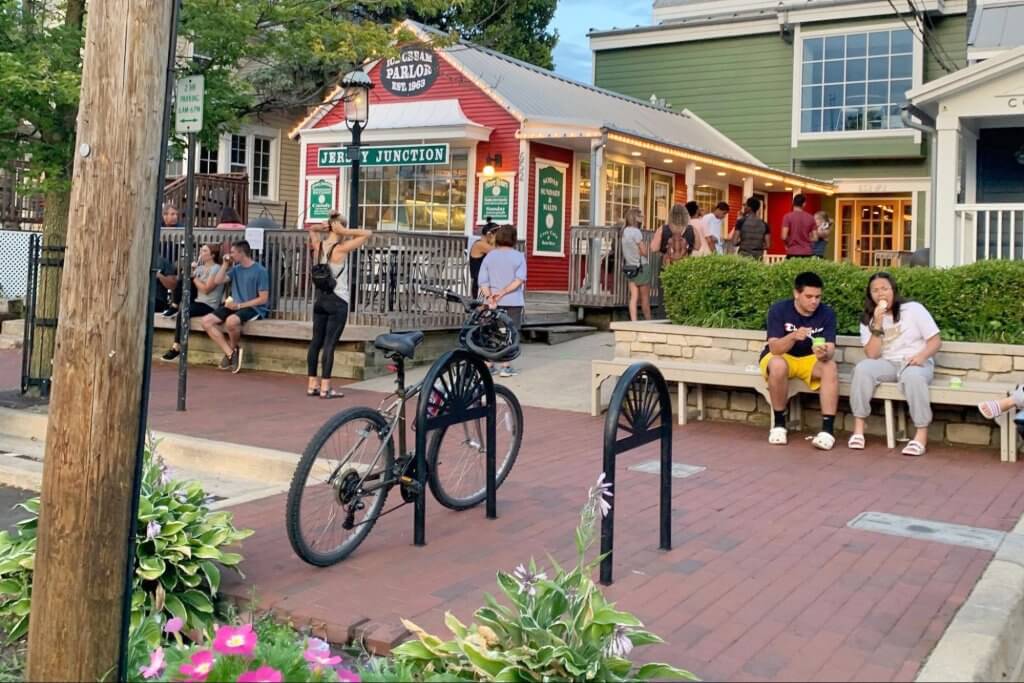
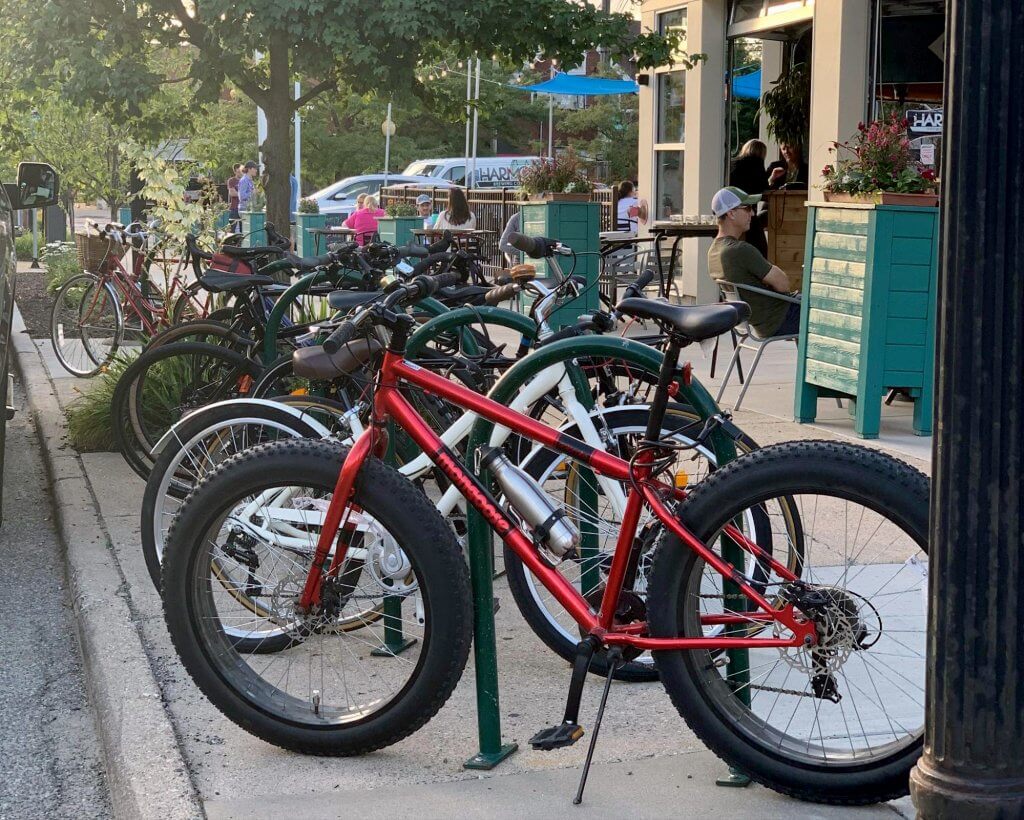
A classic U rack, the kind most people picture when they think of bike parking, holds the frame or wheel in place but offers no real security. It’s fast, it’s cheap, and it’s exactly why open racks are the most common theft location. A quality U-lock helps, but with bolt cutters costing less than $30 and taking under 30 seconds to defeat a basic lock, an open rack alone puts the entire burden of security on the rider.
Open racks still have a place, as short-term, high-visibility parking for quick stops. But relying on them as the only solution is why theft numbers start climbing.
Bike Lockers: Maximum Security, Individual Access
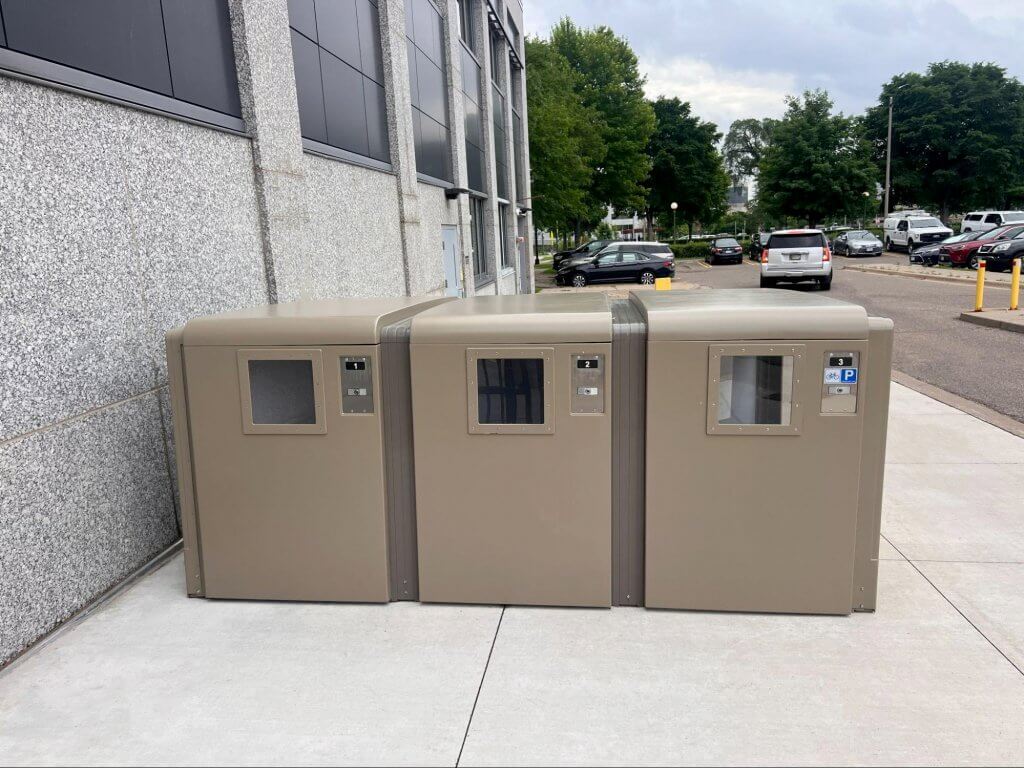
At the other end of the spectrum are fully enclosed bike lockers. A rider’s bike, and any gear left with it, is completely out of sight and physically inaccessible to anyone else. This is the gold standard for long-term parking: commuters leaving a bike at a transit station all day, residents storing a bike overnight, or employees parking for a full shift.
The tradeoff with most lockers is footprint, cost, and material durability over time, which is exactly where CycleSafe’s ProPark® Bike Lockers stand apart. Instead of standard sheet metal, ProPark lockers are built from a hot compression-molded SMC composite, a material engineered to match the strength of metal without the rust and corrosion issues that shorten the lifespan of traditional lockers. For a property that needs parking to hold up through years of summer heat, winter salt, and everything in between, that difference in material shows up directly in lifecycle cost.
ProPark’s modular, interlocking design also means it scales with your site rather than forcing a fixed layout. Configurations include:
- Single-tier or double-tier stacking to maximize bikes per square foot.
- Standard, view-thru, or side-view door styles depending on sightline and security preferences.
- Standalone starter units or extended banks, from a 2-bike starter up to 20+ locker banks.
- Multiple lock options, including Abloy high-security mechanical locks, keypads, RFID, and Bluetooth cellular access.
Many properties begin with only a few lockers and expand over time. Because ProPark lockers share structural components, additional lockers can be integrated into existing installations without replacing the original investment. That flexibility makes ProPark a fit for everything from a small multi-family courtyard to a full transit park-and-ride.
See the full range of configurations, finishes, and lock options.
Bike Shelters: The Middle Ground That Scales
Between open racks and individual lockers sits the option that works for the widest range of properties: covered, semi-enclosed bike shelters. A shelter combines weather protection with a shared secure structure; racks are mounted inside a covered, often lockable enclosure, giving riders a meaningful deterrent without the footprint or per-unit cost of individual lockers.
This is typically the sweet spot for multi-family communities, retail centers, and transit stops that need to park a group of bikes securely, but don’t have the space or budget for a locker for every single rider.
See covered options built for multi-bike sites. Browse CycleSafe Bike Shelters
Bike Stations: Built for Sites With Mixed Needs
Many properties don’t have just one type of rider, they have a mix of quick-stop visitors, all-day commuters, and residents who need overnight storage. A bike station combines shelters, commercial racks, and lockers into a single footprint, so short-term and long-term parking needs are both covered without forcing a one-size-fits-all decision.
Not sure which combination fits your property? Talk to a CycleSafe rep about a custom bike station
What Actually Reduces Theft (Beyond the Hardware)
Security hardware matters, but the properties that see the biggest drop in theft usually combine it with a few other habits:
- Visibility matters as much as enclosure. Parking placed in well-lit, high-traffic areas near entrances discourages opportunistic theft, even before you add covered or locked structures.
- Encourage registration. Programs like Bike Index give residents and employees a free way to register bikes, which meaningfully improves recovery odds if a theft does occur.
- Match capacity to season, not to your slowest month. If your property fills up every summer, sizing parking for the colder season guarantees overflow onto whatever open rack or tree is nearby, meaning the least secure option on-site.
- Plan for e-bikes and cargo bikes now. These are the highest-value targets on any property, and standard racks and lockers often weren’t designed to accommodate their size or removable parts.
Get Ahead of the Summer Rush
Bike theft doesn’t spike because thieves get more motivated in the summer; it spikes because more bikes sit in inadequate parking for longer periods. The properties that avoid becoming a statistic are the ones that matched their parking infrastructure to their actual ridership before the season hit its peak.
For most properties weighing security against cost and footprint, ProPark Bike Lockers check every box: metal-grade strength, rust-proof composite construction, a 50+ year design life, and enough configuration options to fit almost any site, from a 2-bike starter unit to a 20+ locker bank.
Ready to secure your site before ridership peaks?
See ProPark Bike Locker options or Request a quote from CycleSafe
