
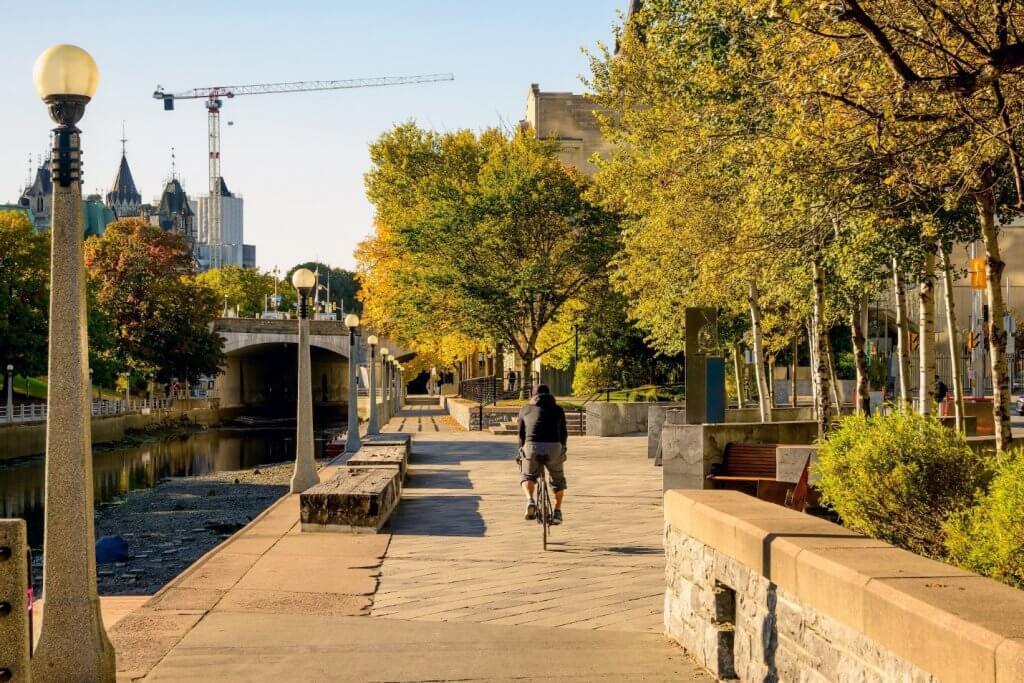
If you’re a Canadian municipal planner, transit agency, university facilities manager, or nonprofit advocate looking to expand secure bike parking, there’s more funding available than most communities realize. Bicycle storage, from simple racks to fully enclosed lockers, is explicitly recognized as active transportation infrastructure under Canada’s National Active Transportation Strategy, and it qualifies for support across a range of federal and provincial programs. Here’s a comprehensive breakdown of what’s available in 2026 and how to pursue it.
Why Bike Parking Qualifies as Infrastructure in Canada
Active transportation—defined by the Government of Canada as any form of human-powered travel including cycling, walking, and the use of mobility aids—has its own dedicated federal strategy and funding stream. Since 2015, federal investment through the Investing in Canada Plan has supported more than $236 million in active transportation projects, explicitly described as ranging “from bicycle storage lockers to complete active transportation networks.” That’s a clear signal that bike parking isn’t an afterthought in Canadian infrastructure policy; it’s a named, fundable category in its own right.
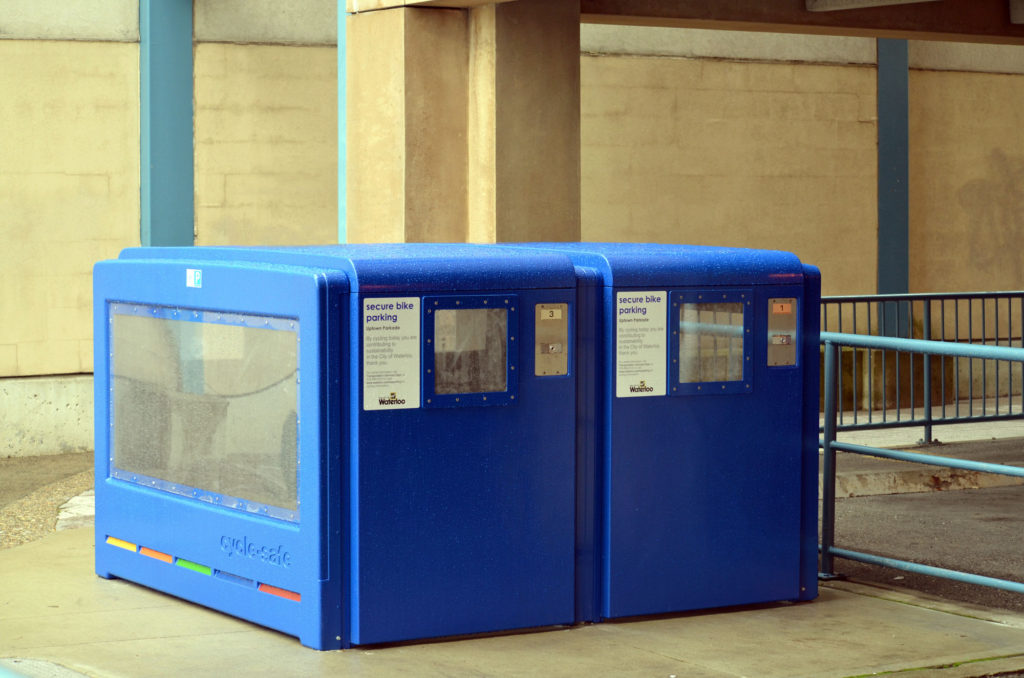
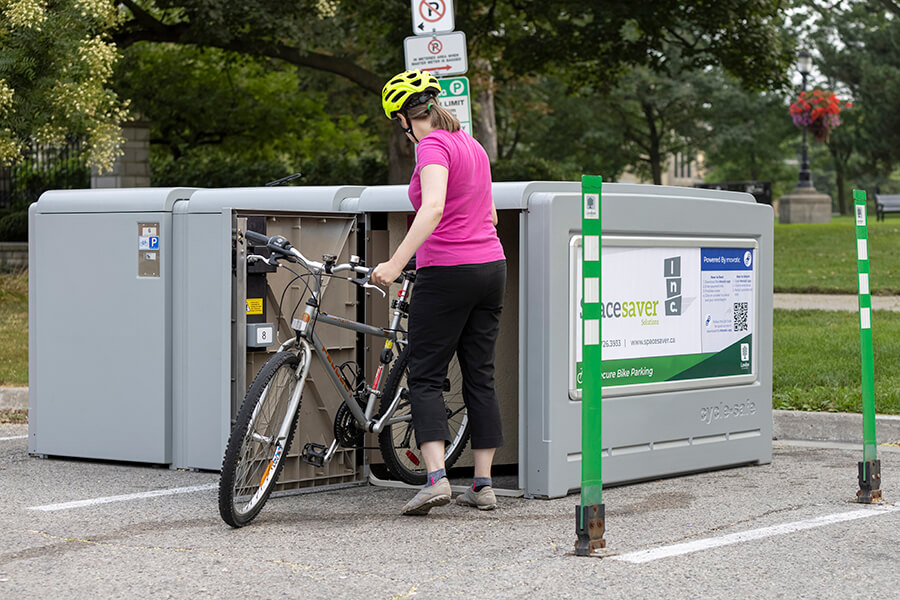
From racks and shelters to secure lockers, CycleSafe’s product line is designed to fit the active transportation infrastructure that Canadian federal and provincial programs are built to support.
Turn available grant funding into lasting cycling infrastructure. Explore secure bike lockers, racks, shelters, and storage solutions designed for Canadian communities, businesses, and institutions.
Federal Funding Programs
1. Active Transportation Fund (ATF)
The Active Transportation Fund is the most direct federal funding pathway for bike parking projects in Canada. Launched in 2021 as part of Canada’s first National Active Transportation Strategy, the ATF originally committed $400 million over five years to expand and enhance active transportation infrastructure nationwide, with up to $500 million made available for capital projects and a minimum of 10% of total funding reserved for Indigenous recipients.
Beginning in 2026-27, the ATF is transitioning into the Targeted Funding stream of the new Canada Public Transit Fund (CPTF), which represents a historic commitment of roughly $3 billion annually for permanent public transit and active transportation programming. Under this new structure, the Targeted Funding stream will run as a series of recurring calls for applications rather than one continuous intake, so timing matters more than it used to.
As of mid-2026, the ATF’s application period is closed, with future intakes to be announced. Communities that want to be ready when the next call opens should have a shovel-ready bike parking project, ideally tied to a broader active transportation plan, prepared in advance.
Eligible expenditures include building or enhancing active transportation infrastructure such as multi-use paths, separated bike lanes, footbridges, wayfinding signage, and associated amenities. Bicycle storage lockers have been funded under this program and its predecessor initiatives in the past, and secure parking that supports a broader active transportation project is a strong fit.
Who can apply: Municipal or regional governments, public sector bodies, not-for-profit organizations, provincial or territorial governments, and Indigenous recipients. Individuals and for-profit organizations are not eligible to apply directly.
How to apply: Monitor Housing, Infrastructure and Communities Canada’s Active Transportation Fund page for the next call for applications. Get ready now by finalizing project scope, cost estimates, and any required planning documents.
2. Canada Community-Building Fund (CCBF)
Formerly known as the federal Gas Tax Fund, the Canada Community-Building Fund is a permanent, formula-based source of funding delivered to provinces and territories twice a year, who in turn distribute it to municipalities. Unlike competitive grant programs, the CCBF doesn’t require a separate application process for every project; municipalities receive predictable funding and choose how to allocate it across 18 eligible categories, one of which is active transportation infrastructure, including bike lanes, sidewalks, and multi-use paths.
The CCBF delivers more than $2 billion annually to roughly 3,600 communities across the country, supporting approximately 4,000 projects each year. Because municipalities can pool, bank, and borrow against this funding, it’s often one of the most flexible tools available for financing bike parking as part of a larger streetscape or transit-access project, especially in smaller communities without the staff capacity to compete for discretionary grants.
Who can apply: Municipalities receive CCBF allocations automatically through their province or territory. If you’re a city planner or public works official, your own municipal council and infrastructure department manage how these funds are allocated, so the “application” is really an internal budgeting and prioritization process.
How to apply: Reach out to your municipality’s infrastructure or public works department to understand what CCBF funds are already earmarked for active transportation in the current budget cycle.
3. FCM Green Municipal Fund (GMF)
The Green Municipal Fund, administered by the Federation of Canadian Municipalities (FCM) through an endowment from the Government of Canada, finances capital projects that reduce greenhouse gas emissions and improve environmental outcomes. Transportation is one of its core eligibility areas, and projects that support “transportation networks and commuting options” can include secure bike parking as a component of a larger sustainable mobility investment, particularly when tied to transit-oriented development or mode-shift goals.
GMF funding has previously supported active transportation initiatives across the country, including cargo-bike and bike-share feasibility studies in Quebec and transportation planning work in communities of all sizes. The fund offers both capital project financing and feasibility study grants (up to 50% of eligible costs, to a maximum of $175,000), making it a useful option for communities still in the planning stages of a larger bike parking or mobility hub project.
Who can apply: Canadian municipal governments and their partners, including municipally owned corporations and partnerships between municipalities and other organizations.
How to apply: Use FCM’s funding search tool on the Green Municipal Fund website to identify the capital project or feasibility study stream that best matches your bike parking project’s scope and timeline.

Provincial Funding Programs
Federal programs provide the backbone, but several provinces run their own active transportation funding streams, some of which are more directly accessible for smaller municipalities, school boards, and community organizations.
British Columbia
British Columbia has historically been one of the most active provinces for bike parking funding through its Active Transportation Infrastructure Grants Program, which has awarded nearly $130 million across more than 400 projects since 2017, with the province covering between 50% and 80% of eligible project costs depending on community size and Indigenous partnership status. However, the 2025/2026 non-Indigenous intake has been paused pending the outcome of a broader CleanBC program review, and no infrastructure grant awards are expected this cycle. Indigenous applicants and Indigenous governments in partnership with local governments can still apply through a continuous rolling intake.
On a smaller but more reliably funded scale, the BC Bike Valet Grant Program, administered by the BC Cycling Coalition, was renewed for 2026 and supports secure, staffed bike valet parking at events and public gatherings, a good fit for communities looking to demonstrate demand for permanent bike parking infrastructure.
Recommendation: BC communities should watch for the outcome of the CleanBC review before assuming the Active Transportation Infrastructure Grants Program will reopen in its previous form, and consider the Bike Valet Grant Program as a lower-barrier option for event-based or pilot bike parking in the meantime.
Vancouver, British Columbia, Bike Parking Regulations
Quebec
Quebec runs two closely related programs through the Ministère des Transports et de la Mobilité durable under its broader active transportation umbrella:
- Programme d’aide aux infrastructures de transport actif (Véloce III) supports the development, improvement, and maintenance of the Route Verte network and connected regional cycling infrastructure. Applications are accepted through periodic calls for projects; the most recent 2026-2027 call closed in late 2025, with results now available.
- Programme d’aide financière au développement des transports actifs dans les périmètres urbains (TAPU) funds active transportation infrastructure within urban areas, including cycling and pedestrian networks, with maximum contributions of up to $1 million per project (higher for structures and bike-share systems). This program also absorbed Quebec’s dedicated bike-share funding stream (OVLIS) in 2022, so shared micromobility docking infrastructure is eligible here as well.
Who can apply: Municipalities, regional county municipalities (MRCs), and in some cases nonprofit organizations and transit authorities mandated by local governments.
How to apply: Contact the Ministère des Transports et de la Mobilité durable directly, as both programs run on periodic call-for-projects cycles rather than continuous intake.
Ontario
Ontario’s most prominent bike-specific capital program, the Ontario Municipal Commuter Cycling Program, distributed roughly $93 million to 120 municipalities in its most active funding round, but has not run a comparable dedicated intake in recent years. Municipalities such as Toronto continue to fund cycling infrastructure, including bike parking, primarily through their own capital budgets rather than a standing provincial grant, and cycling advocacy groups have flagged ongoing pressure on municipal cycling budgets in 2026. Ontario municipalities pursuing bike parking funding should treat provincial programs as an evolving landscape and lean more heavily on federal programs like the ATF and CCBF, or embed bike parking into transit and Complete Streets projects funded through municipal capital plans.
London, Ontario, Bicycle Parking Requirements
Toronto, Ontario, Bicycle Parking Requirements
Alberta
Alberta doesn’t run a single dedicated cycling-infrastructure grant the way BC and Quebec do. Instead, bike parking funding tends to flow through broader municipal infrastructure and recreation programs, alongside continued federal support delivered directly to Alberta municipalities.
- Local Government Fiscal Framework (LGFF) is Alberta’s primary capital funding program for municipalities, having replaced the Municipal Sustainability Initiative (MSI) in 2024. LGFF dollars are allocated to local infrastructure priorities set by each municipality, so a bike parking project competes for the same pool of funding as roads, water systems, and public buildings rather than having a dedicated cycling stream.
- Build Communities Strong Fund – Community Stream allows local governments to apply for funding to build or revitalize public infrastructure, a category broad enough to include active transportation amenities like bike parking when bundled into a larger streetscape or facility project.
- Built Together Program, run by the Alberta Recreation and Parks Association, provides $50,000 grants to support outdoor recreation infrastructure, including cycling paths, in Edmonton, Calgary, a secondary city, a rural community, and an Indigenous community each cycle. It’s a recreation-focused program rather than a transportation one, but it has funded cycling-adjacent infrastructure in the past.
Federal funding continues to reach Alberta directly. In February 2026, the Active Transportation Fund committed $1.8 million to Lethbridge for a two-kilometre active transportation connection, a reminder that Alberta municipalities remain eligible for national programs like the ATF and CCBF even without a matching provincial grant of their own.
Recommendation: Alberta municipalities and organizations should treat federal programs as the primary funding pathway, and check with their municipality’s infrastructure department about how LGFF and Build Communities Strong Fund dollars are currently allocated before assuming a dedicated cycling grant exists at the provincial level.
Calgary, Alberta, Bike Parking Regulations
Edmonton, Alberta, Bike Parking Regulations
Atlantic Canada
Several Atlantic provinces run standing Active Transportation Fund programs at the provincial level, distinct from the federal ATF:
- Prince Edward Island’s AT Fund supports active transportation infrastructure including equipment racks, multi-use pathways, and accessibility equipment, with municipalities, Indigenous communities, and community groups eligible to apply. The province reviews applications on an annual cycle tied to the upcoming construction season.
- Nova Scotia offers provincial funding of up to $100,000 for active transportation projects that improve connectivity and support cycling and pedestrian infrastructure, administered alongside other transportation and clean-energy funding streams.
Recommendation: These smaller provincial programs are worth pursuing specifically because they tend to have lower application barriers and shorter timelines than federal programs, making them a good complement to a federal ATF or CCBF application for the same broader project.
Practical Tips for Canadian Applicants
Tie bike parking to a broader active transportation plan. Nearly every program above favors projects embedded in a documented network plan, transit-access strategy, or Complete Streets initiative over standalone rack installations. If your municipality doesn’t have a current active transportation master plan, developing one (which is itself fundable through several of these programs) will strengthen every future application.
Track federal program transitions closely. With the Active Transportation Fund moving into the Canada Public Transit Fund’s Targeted Funding stream in 2026-27, timelines and application processes are changing. Sign up for updates directly from Housing, Infrastructure and Communities Canada so you can prepare and meet deadlines.
Don’t overlook the Canada Community-Building Fund. Because CCBF dollars flow to municipalities automatically, it’s often the fastest path to funding a bike parking project, especially a smaller one, without waiting on a competitive federal or provincial intake.
Watch provincial program status before budgeting around it. British Columbia’s flagship program is currently paused, and Ontario’s dedicated cycling capital program has not seen a recent large-scale intake. Confirm a program is actively accepting applications before building your project timeline around it.
Quantify ridership and mode-shift impact. Canadian funders increasingly want to see projected usage, emissions reduction, and connectivity benefits. A secure bike parking facility positioned as part of a transit-access or commuter strategy is a stronger application than one framed as a standalone amenity.
Consider Indigenous set-asides and partnerships. Programs like the ATF and BC’s Active Transportation Infrastructure Grants reserve dedicated funding or offer higher cost-share rates for Indigenous applicants and partnerships, which can significantly improve a project’s competitiveness and funding ceiling.
Ready to move forward on a bike parking project? Get in touch, and
we’ll help you spec the right solution for your space, your budget, and your grant requirements.
The Bottom Line
Canada’s funding landscape for bike parking is in transition. The federal Active Transportation Fund is being folded into the much larger Canada Public Transit Fund starting in 2026-27, British Columbia’s flagship provincial grant is paused pending a policy review, and Ontario’s dedicated cycling capital program has gone quiet in recent years. That doesn’t mean the money has disappeared; it means the pathways have shifted, and communities that stay closely tuned to federal announcements, lean on flexible programs like the Canada Community-Building Fund, and keep a shovel-ready project on the shelf will be best positioned to move quickly when the next call for applications opens.
The key is to start locally: Reach out to your municipal infrastructure department to understand how CCBF funds are currently allocated, monitor Housing, Infrastructure and Communities Canada for the next ATF/CPTF intake, and check your provincial transportation ministry’s active transportation page for regional programs. Bike parking may be a small line item in a larger capital plan, but the funding landscape supporting it is broader than most communities realize.
Related Resources:
- Bike Parking Guidelines
- Bike Parking Layout and Design Dimensions
- How to Choose a Bike Locker
- Modular Bike Lockers: Scalable Infrastructure with Long-Term Lifecycle Advantage
- Federal & State Grants That Can Fund Bike Parking in 2026 (United States)
- Two New Canadian Success Stories for Secure, Smart Bike Parking
Resources: Housing, Infrastructure and Communities Canada (Active Transportation Fund, National Active Transportation Strategy, Canada Public Transit Fund); Federation of Canadian Municipalities (Green Municipal Fund, Canada Community-Building Fund); Government of British Columbia (Active Transportation Infrastructure Grants Program); BC Cycling Coalition; Gouvernement du Québec, Ministère des Transports et de la Mobilité durable (Véloce III, TAPU); Government of Prince Edward Island; Nova Scotia Funding Portal; NABSA.
