
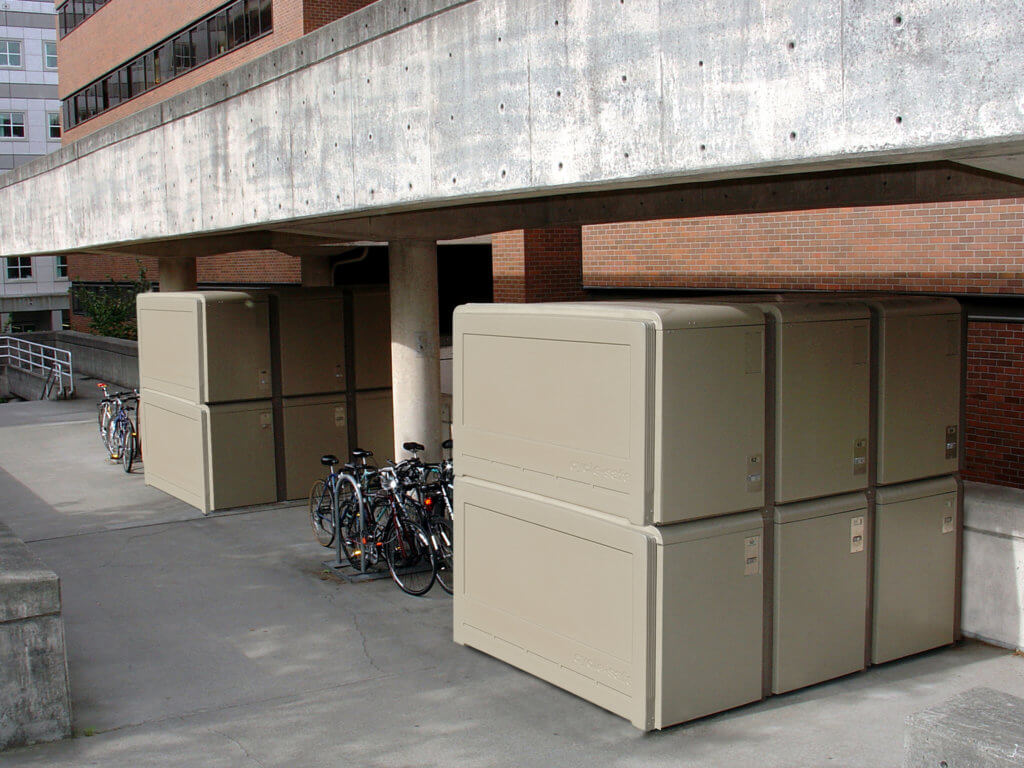
Plan secure campus bike parking around the people who may use it, the departments that will operate it, and the access rules that must remain workable across semesters, buildings, and capital projects.
CycleSafe helps campus mobility, facilities, planning, housing, safety, IT/access, procurement, and design teams evaluate digital and credentialed access as part of a coordinated bike parking system—not as a stand-alone technology decision. For new programs and existing ProPark® System installations, CycleSafe can help teams assess access options, operating requirements, phased implementation, retrofit opportunities, and the fit between smart-access components and the physical system.
Align users, access, administration, and infrastructure before selecting a system.
Credentialed Access Should Begin with the Campus Operating Model
A credential can make entry convenient, but it does not define the service. Before a campus chooses an app, card, fob, keypad, or other access method, it needs to decide how the bike parking program will work in practice.
That means defining who is eligible, whether spaces are assigned or shared, how access begins and ends, who supports users, and what happens when a student graduates, an employee leaves, a permit expires, or a location changes ownership. The physical bike parking, eligibility rules, access method, administrative responsibility, site conditions, and future upgrade path should be planned together.
Planning principle
Use connected access where it improves operational continuity. Do not add it merely because the technology is available.
Where Managed Access May Fit on Campus
Managed access is most useful where parking duration, security expectations, eligibility, or administrative oversight justify more control than an open rack provides. The right model may differ by location without requiring a different strategy for every stakeholder.
Residence Halls and Student Housing
Secure overnight or long-duration storage may benefit from defined resident eligibility, access periods, user responsibilities, and a clear process for turnover at the end of a term or housing assignment.
Parking Structures and Commuter Areas
Longer-duration commuter parking may use assigned, permitted, reservable, or first-come access. The campus should decide how demand, capacity, support, and renewal will be managed before configuring the technology.
Controlled Bike Rooms
A controlled room combines door access with interior layout, circulation, capacity, and user rules. Entry control does not replace the need for appropriate bicycle locking or a usable room design. Where individual lockers are installed inside the room, their access method should be coordinated with the room-entry model.
Distributed Locker Programs
Lockers across multiple campus zones can create administrative complexity. Digital access or centralized user control may help, but only if ownership, response procedures, and compatible infrastructure are defined.
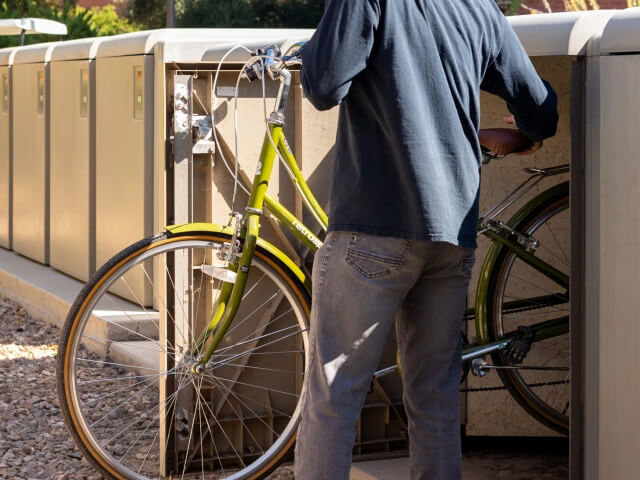
Define Eligibility and Access Rules Before Choosing the Credential
Students, faculty, staff, residents, commuters, and visitors may need different access periods. A practical operating model begins with a consistent set of rules:
- Who qualifies for the service, and who approves exceptions?
- Is use assigned, reserved, rented, permitted, or first come?
- When is access granted, renewed, suspended, and revoked?
- Does the program operate by academic term, housing assignment, permit year, or another cycle?
- What responsibilities remain with the user, including locking the bicycle inside a room or locker area?
Once those rules are clear, the campus can evaluate whether an existing credential, a dedicated RFID card or fob, a keypad, or an app-based system is the best fit. Compatibility with campus identity or access-control systems must be confirmed for the specific credential, reader, lock, software, network, and administrative workflow.
Assign Administrative Ownership
Managed access creates an ongoing service, not just an installation. The institution should identify one accountable program owner and define how supporting departments participate. Mobility or parking may manage eligibility; housing may manage resident turnover; facilities may maintain the physical assets; IT or access-control staff may review technical and security requirements; campus safety may advise on access and incident procedures.
The exact ownership model will vary. What matters is that users know where to get help and that the campus knows who can grant access, troubleshoot the system, review usage, coordinate repairs, and approve changes.
See CycleSafe’s current app-based access and management features for compatible bike lockers.
Choose an Access Method That Fits the Program
CycleSafe currently offers multiple ProPark® lock approaches, including keyed and user-supplied-lock options, app-based digital access, programmable keypad access, and a keypad/RFID option. Digital access for ProPark and EcoPark locker series can support app-based finding, reservation, rental, payment, user-list administration, access control, and live-data reporting, depending on the selected configuration.
Not every capability belongs in every campus program. A residence-hall assignment may not need on-demand payment. A public-facing commuter program may need reservations or rentals. A controlled institutional program may value restricted eligibility more than open access. The system should be configured around the service the campus intends to operate.
Retrofitting Existing ProPark® Bike Lockers for Smart Access
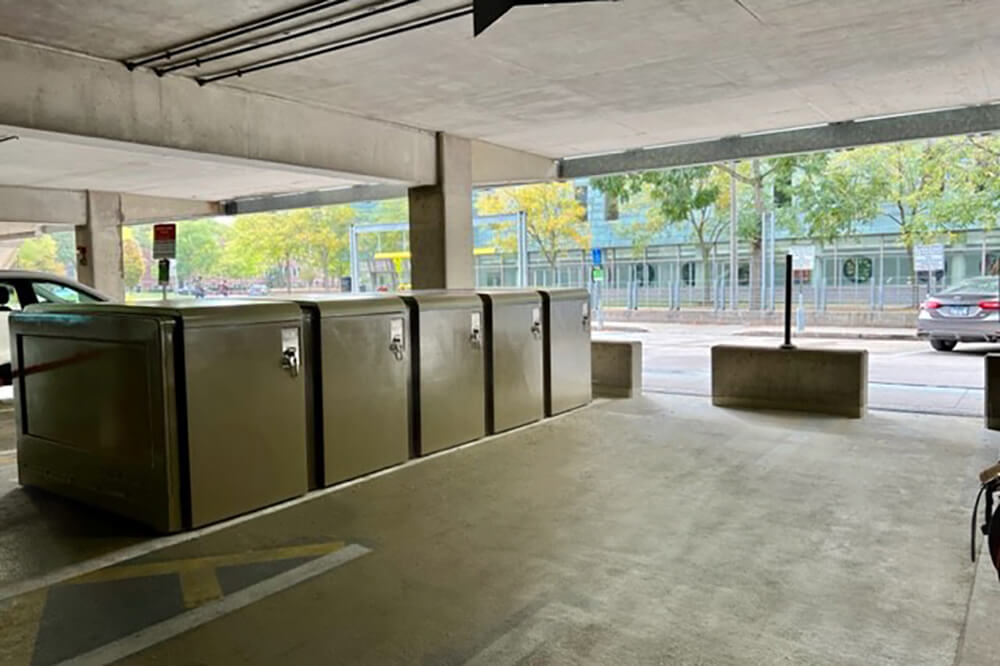
For colleges and universities that already have ProPark System bike lockers in place, moving to Smart Bike Parking™ does not generally require full locker replacement. ProPark’s modular construction allows most existing installations to be upgraded with smart-access technologies, including mobile credentials and other wireless or keyless options.
The modular design of the ProPark System allows campus teams to upgrade access components rather than remove and replace otherwise serviceable locker infrastructure. This can help institutions introduce digital access, improve administrative control, and make secure storage easier to use while extending the value of their existing investment.
For existing CycleSafe customers, these upgrades can often be evaluated and implemented as part of a phased approach. Contact CycleSafe to review current ProPark System installations and determine which smart-access and credentialed-access options are appropriate for the locker configuration, condition, site, campus operating model, and desired rollout.
Plan New and Existing Systems Around the Intended Access Model
CycleSafe digital-access options are available for ProPark and EcoPark locker series. For a new system or a retrofit, CycleSafe can help evaluate locker and lock configurations, access methods, program administration, site conditions, and phased deployment requirements. Final compatibility and scope should be confirmed for the selected locker, door, lock preparation, credential or app, software, connectivity, and administrative workflow.
Access technology cannot correct a poor location, the wrong storage type, inadequate capacity, constrained circulation, or unclear maintenance ownership. The campus should still match parking duration and risk to the environment, then coordinate the physical system, access technology, and operating responsibilities.
Use Access and Usage Information for Defined Decisions
Digital management can provide user administration, access control, and live-data reporting. The useful question is not how much data a system can collect, but which decisions the campus expects the information to support.
- Is demand high enough to expand capacity at a specific location?
- Are spaces being used for the intended duration and user group?
- Should a reservation, rental, or permit rule be adjusted?
- Who needs access to administrative information, and how long should it be retained?
The institution should confirm available fields, reporting, privacy, retention, security, and administrative controls for the selected platform. Avoid assuming that access data alone measures theft prevention, transportation outcomes, or user satisfaction.
An Operating Model Is More Than a Credential
Northwestern University’s Chicago campus bike room offers a useful institutional example. The university states that an authorized Wildcard is required for entry, but it also defines eligibility, enrollment, annual access periods, operating hours, priority, and user responsibilities. In other words, the credential works because it belongs to a larger service model.
Questions to Resolve Before Specification
- What campus environment and parking duration will the system serve?
- Who is eligible, and how will access begin and end?
- Will spaces be assigned, reserved, rented, permitted, or first come?
- Which department owns the service, user support, and physical maintenance?
- Which access methods are compatible with the selected locker, room, credential, software, and network environment?
- What information is needed to operate or improve the program—and what governance applies to it?
- How may capacity, access requirements, or campus standards change over time?
Answering these questions early gives procurement teams and specifiers a clearer basis for comparing systems, documenting requirements, and protecting operational intent through installation.
Turn Campus Access Requirements Into a Workable System
A campus does not need to resolve every technical detail before beginning the conversation. It does need a clear understanding of the locations, users, administrative responsibilities, existing infrastructure, and access requirements the program must support.
CycleSafe can help campus teams assess existing ProPark® System installations, compare access approaches for new lockers, identify compatibility questions, and translate operating requirements into a practical implementation path. The process can begin with drawings, site photographs, locker information, credential requirements, or simply a description of the operational problem the campus is trying to solve.
Planning a new system or evaluating existing ProPark® lockers? Bring your site information and access requirements.
Related Resources
- University & College Bike Parking Solutions — Plan the broader campus parking hierarchy across lockers, racks, shelters, rooms, and related infrastructure.
- Planning Bike Parking for Higher Education Campuses — Use a long-term framework for standards, phased capacity, high-density options, and managed access.
- Digital Access Bike Locker — Review current app-based locker access and management features.
- Lock Options for ProPark® Locker — Compare current mechanical and electronic lock options.
- Modular Bike Lockers and Lifecycle Cost Advantage — See how ProPark® modularity supports component upgrades, repair, expansion, and long-term infrastructure value.
- Smart Bike Parking™ & Mobility Hubs — Explore the broader role of connected, modular bike parking in mobility systems.
- Features of a Successful Indoor Bike Room Design — Consider physical layout and user experience for controlled indoor storage.
