
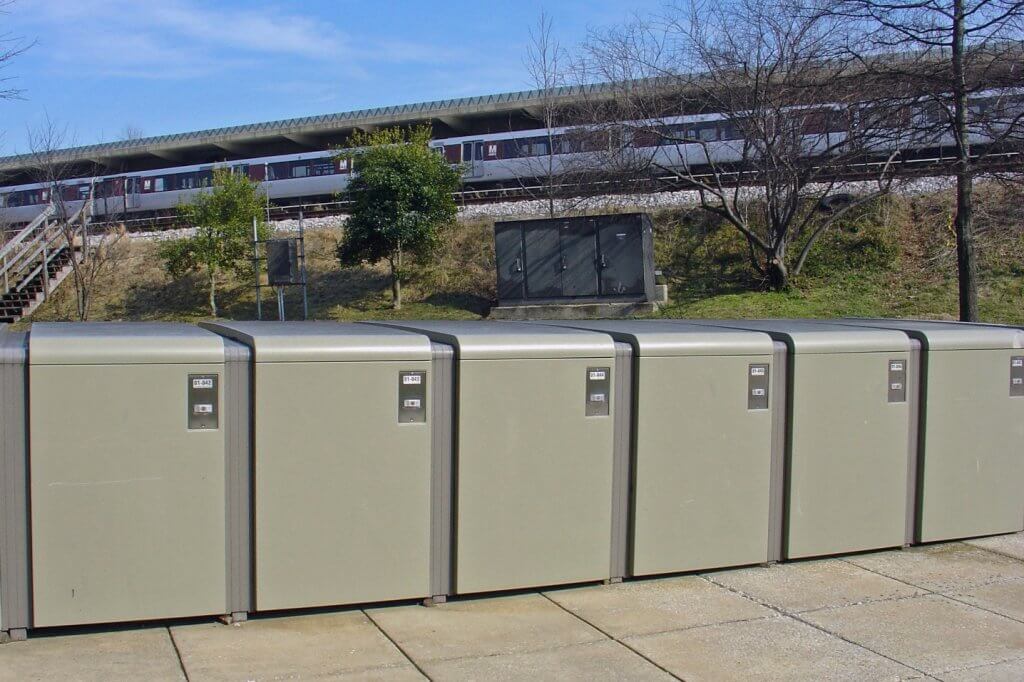
Bike Parking Demand Rarely Stays Static
A university installs ten bike lockers near a residence hall to handle the commuters who ask for them most often. It’s a modest project—enough capacity for today, tucked into a corner of the parking lot. The design team that sized it had no real way to know what the campus would need five years out; they specified for the demand in front of them, which is usually all anyone can do.
Two years later, the same campus has an eBike charging problem at that location, a waitlist for lockers near a second dorm, and a transportation office trying to figure out whether to expand the original bank, start a new one, or rethink the whole layout.
Nothing about the original design was wrong. It just wasn’t built to answer the question that came next.
That’s the pattern behind most bike parking planning: it’s sized for the conditions in front of you, and those conditions rarely hold still. Campuses grow. eBike adoption accelerates. Transit systems add stations and stops. What looks like enough infrastructure today—and what looks like a defensible specification today—can turn into a bottleneck within a few years, not because the original decision was poor, but because the infrastructure itself wasn’t designed to evolve.
That’s the problem modular infrastructure is built to solve.
The Cost of Planning for Today Only
Most bike parking projects follow a familiar sequence: assess current demand, allocate the available space, install, and consider the project done. That approach works until conditions change—and on a campus, at a transit hub, or across a growing city, they always do.
It also puts real pressure on whoever has to make the call. Architects and specifiers are routinely asked to lock in capacity and space allocation years before a building opens, based on demand figures that are really just informed guesses. Guess too high and the project overbuilds—capital sunk into capacity that sits underused. Guess too low, which is far more common, and the infrastructure becomes overcrowded and fragmented within a few years, forcing owners into reactive, piecemeal expansion that a fixed system was never designed to accommodate cleanly.
Both outcomes trace back to the same root cause—treating bike parking as a one-time sizing decision rather than infrastructure that has to keep pace with a system that’s still evolving.
A System Designed to Grow, Not Just Get Built
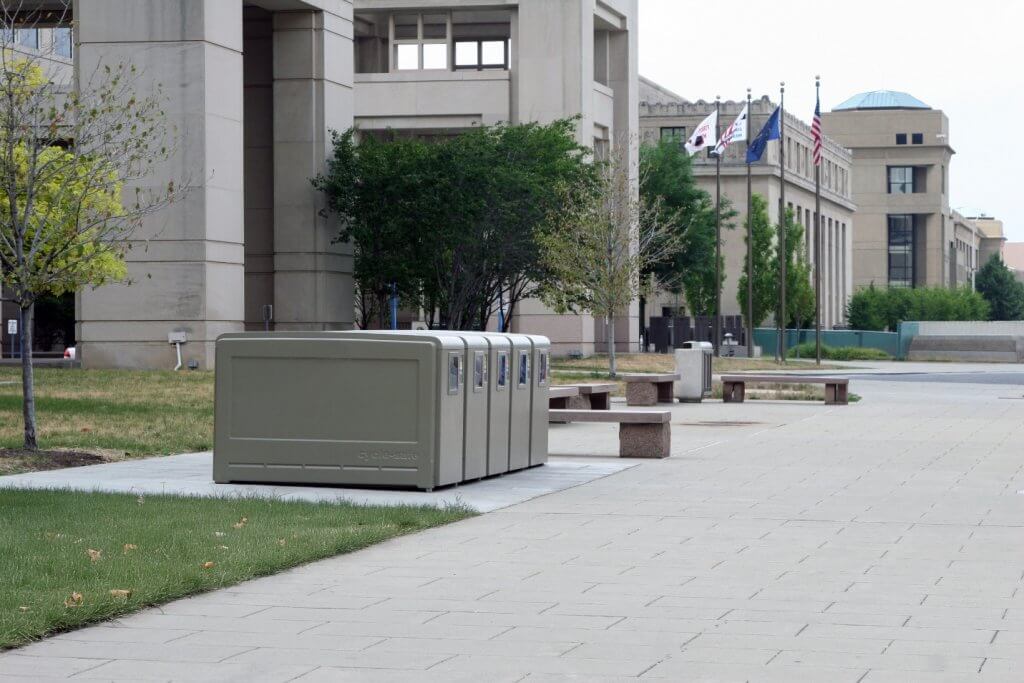
The ProPark® System was designed around a different assumption: that demand won’t stay where it started. Rather than a fixed set of standalone lockers, ProPark is a modular, infrastructure-grade system engineered to expand, reconfigure, and upgrade over time—without replacing what’s already in the ground.
That changes what a design team is actually committing to at the specification stage. Instead of guessing a final number and building space around it, an architect can specify a system sized for current, documented demand and design in the capacity to grow—without having to predict, years in advance, exactly how large the deployment will eventually need to be. The starting point becomes a floor, not a ceiling.
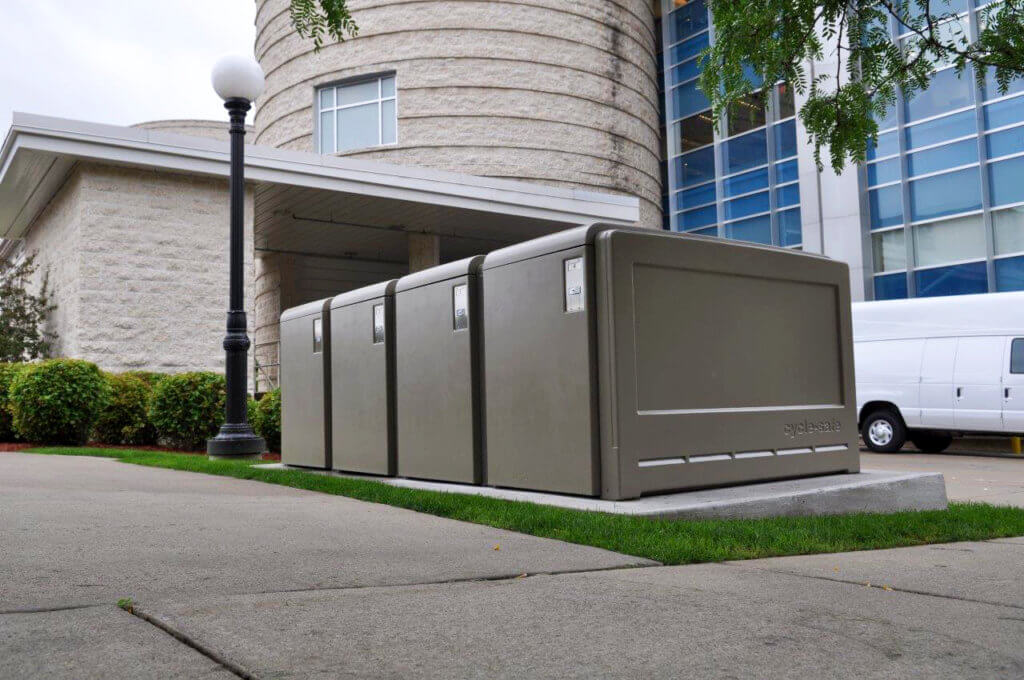
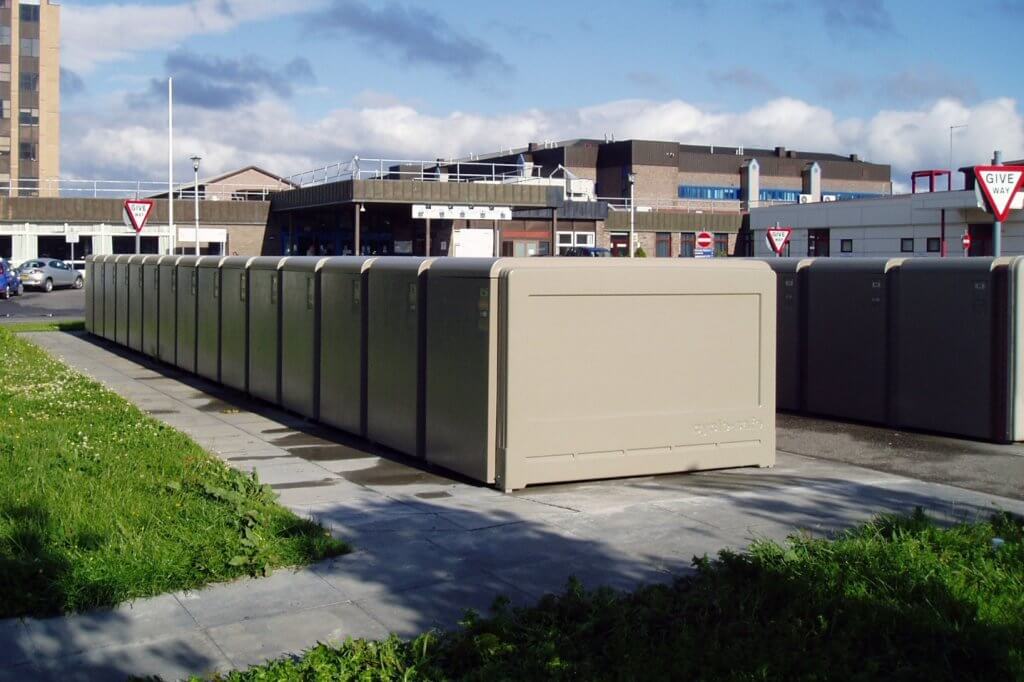
In practice, that starts with straightforward physical growth. A transportation department that starts with ten lockers near one residence hall can add to that same bank as demand grows, rather than starting over with a new, disconnected installation. What begins as a single deployment can scale, over several years, into a distributed, campus-wide system: secure storage near residence halls, higher-turnover parking near the academic core, transit-linked installations at the campus edge. Because ProPark’s starter-and-adder architecture lets new units interlock with existing ones, that growth stays continuous instead of becoming a patchwork of mismatched generations of equipment.
See how starter units, adder units, locker banks, and modular expansion strategies allow bike parking infrastructure to grow alongside changing demand.
Growth Isn’t Always a Straight Line
Expansion is only half of what modularity solves. Demand doesn’t just grow — it shifts. A city that installs secure lockers at one transit station may find, a few years later, that ridership has moved to a different corridor, that a downtown redevelopment has repositioned where cyclists actually need to park, or that a new mobility hub needs infrastructure a single station-side installation was never designed to support.
A fixed system can’t respond to that kind of shift without a full replacement. A modular one can. ProPark installations can be redistributed, expanded selectively, or relocated as usage patterns change—and existing locker banks can even be reconfigured to accommodate longer cargo bikes as fleet needs evolve. That flexibility comes from the same interlocking architecture that enables expansion: shared structural components and a retrofit-capable design that lets the system respond to new conditions instead of being boxed in by the assumptions of the original install.
It also pays off in day-to-day durability. In a traditional metal locker, a single significant impact can compromise the whole unit, often forcing a full replacement. With ProPark’s modular construction, a damaged door or side panel can typically be replaced on its own—cutting repair costs and keeping the rest of the system in service.
Compare repairability, lifecycle performance, phased investment, and maintenance considerations across different bike parking infrastructure approaches.
Modularity Extends to Technology, Too
Physical growth is the most visible form of modularity, but it isn’t the only one. Access technology changes just as fast as demand does, and most organizations start with something simple—keyed T-handles or swing-handle doors—long before they need anything more sophisticated.
That changes over time. A transit agency may eventually want lockers to work with transit cards or mobility-app credentials. A municipality building out a mobility hub may need contactless payment, digital wallets, or cloud-managed access shared across sites. ProPark was built to absorb that shift without a system-wide overhaul: in most cases, upgrading access means replacing a door, not the locker bank behind it. A keyed T-handle installed today can later support digital access, mobile credentials, or integration with a broader transit platform—turning a technology change from a replacement cycle into a phased upgrade.
This is where Smart Bike Parking™ comes in. It’s the layer that connects secure physical infrastructure with digital access, charging for eBikes and eScooters, cloud-based management, usage data, and integration with the broader transportation systems a locker bank increasingly has to work alongside—whether that’s a hotel’s room-key system or a city’s transit and mobility-hub network. In practice, that might mean a transit rider unlocking a locker with the same card they use to board; it might mean a resident charging an eBike overnight without running a cord through a dorm window; it might mean a facilities team getting real-time visibility into which lockers on a five-site deployment are actually being used. Either way, the point is the same: the infrastructure stops behaving like a static asset and starts operating as part of a connected system.
See how credentialed access, contactless payments, transit integration, and cloud-based management extend the value of modular bike parking.
Why Design Intent Has to Survive Procurement
A well-designed, modular specification can still lose its coherence on the way to installation. Procurement processes are built to optimize for cost and schedule, and when the long-term logic behind a system isn’t clearly articulated in the documentation, it’s easy for a coordinated deployment to get value-engineered into a set of disconnected, commodity lockers—especially across large institutions managing dozens of sites and multiple contractors.
This is where a modular, proprietary architecture works in a specifier’s favor. Because ProPark’s starter and adder components interlock in a way generic racks and lockers don’t, the system is harder to quietly substitute down to a mismatched approved-equal during bid review—the specification itself carries the coordination logic, not just a list of parts. That matters most on campuses and in municipal portfolios working across distributed sites and multi-year capital plans, where a specification written today gets inherited by facilities teams, and re-bid by new contractors, for decades. Architects and specifiers who document the lifecycle rationale early— before the project reaches procurement—are the ones whose systems still look like what they designed once construction is finished.
The Real Advantage Isn’t That It Expands
Transportation systems aren’t going to stop changing. eBike adoption will keep climbing, campuses will keep growing, cities will keep redeveloping their mobility networks, and access technology will keep evolving. Organizations that build for today’s numbers alone—and the design teams asked to specify those numbers—will keep running into the same problem: infrastructure that made sense at installation and doesn’t a few years later.
The advantage of a modular system isn’t simply that it can grow from ten lockers to a hundred. It’s that it can evolve—physically, operationally, and technologically—without forcing an organization to abandon what it already built, or requiring a specifier to have guessed right on day one. That’s what makes it infrastructure, not just equipment.
Work with CycleSafe to evaluate phased deployment, future expansion, Smart Bike Parking integration, and long-term infrastructure adaptability for your site.
