
If you’ve managed a bike parking facility in the last three years, you may have noticed something: the bikes showing up are getting bigger. A lot bigger. Electric cargo bikes that would have been a curiosity in 2022 are now regular fixtures at school drop-off zones, apartment complexes, transit hubs, and office campuses. And most of the bike racks and lockers that were spec’d a decade ago weren’t built with them in mind.
The e-bike and cargo bike boom is real, it’s accelerating, and it’s quietly exposing a gap in how we plan bike parking. This post breaks down what’s changed, why it matters for facility managers and city planners, and what you can do about it right now.
The Numbers Behind the Boom
The North American e-bike market is worth an estimated $4.41 billion in 2026, up from $4.11 billion last year, and projected to reach $6.23 billion by 2031. In Canada specifically, the market is forecast to grow from $1.17 billion in 2025 to $2.39 billion by 203, fueled by provincial purchase rebates, dropping battery costs, and rapid urban adoption of cargo models.
But it’s the cargo and utility segment that deserves the most attention from a parking standpoint. Cargo e-bikes are growing at a compound annual rate of nearly 21% in North America, the fastest-growing segment in the entire e-bike category. Globally, the cargo e-bike market is projected to expand from $3.62 billion in 2026 to $8.73 billion by 2034. These aren’t niche vehicles anymore. They’re becoming everyday transportation for families, last-mile delivery operators, and urban commuters alike.
The Size Problem Nobody Planned For
Here’s the core issue: A standard bicycle is roughly 67 inches (about 5.5 feet) long. A cargo bike is typically around 87 inches, or more than 7 feet. Longtail models extend even further. Front-loading “bakfiets” style cargo bikes, like the Urban Arrow Family, measure over 8.5 feet in length and nearly 27 inches wide. These bikes simply do not fit in a standard bike locker or a closely spaced rack row.
Beyond length, there’s weight. A typical commuter e-bike weighs between 45 and 70 pounds. A loaded cargo e-bike can weigh well over 100 pounds before you add cargo, kids, or groceries. That matters when it comes to how a bike leans, how a rack supports the frame, and whether a locker door can actually close.
Planners and facility managers who spec bike parking based on the assumption that all bikes are roughly the same size will quickly find themselves with expensive infrastructure that half their users can’t actually use.
The e-bike and cargo bike boom calls for parking solutions that are stronger, wider, and smarter than what most facilities have today. Browse the full CycleSafe lineup — from heavy-duty staple racks to cargo-capable lockers with built-in charging.
Bike Parking for E-Bikes: What’s Different
Even a standard e-bike — no cargo box, no longtail — presents challenges that conventional bike parking doesn’t always solve:
Size and weight. Many e-bikes are notably heavier than traditional bikes and have thicker frames, particularly around the motor and battery housing. Racks with narrow tube slots or lightweight construction may not provide adequate support.
Battery charging. This is the issue that separates e-bike parking from all other bike parking conversations. Riders who commute by e-bike need to charge during the day. Without a secure, weatherproof charging option, you’re asking them to either carry a heavy battery indoors (inconvenient and increasingly restricted in some buildings due to fire codes) or arrive with a depleted battery. Neither option encourages cycling.
Security expectations. E-bikes are expensive, with many models costing $3,000 to $8,000 or more. Riders who invest at that level have higher security expectations than someone locking up a $400 commuter bike. A basic staple rack on a public sidewalk may not be sufficient for an unattended e-bike, particularly in higher-theft areas.
Frame geometry. Some e-bikes have integrated battery designs, step-through frames, or unusual tube configurations that make locking to a standard ring or post awkward. Good rack design, like a staple rack that supports both wheel and frame, becomes more important, not less.
The Rise of Family Cycling
The cargo bike boom is being driven in part by a fundamental shift in how families think about transportation. Families are increasingly replacing short car trips (school runs, grocery hauls, weekend errands) with cargo bikes, especially as fuel costs climb and urban congestion worsens.
In cities like Copenhagen and Amsterdam, more than a quarter of families with multiple children already own cargo bikes. North America is following that trajectory, particularly in denser urban cores and college towns. Commercial and residential facilities that serve families (schools, apartment buildings, grocery stores, community centers) are seeing more and more of these bikes arrive and nowhere appropriate to park them.
For facilities that want to attract and retain family cyclists, the message is simple: you need to plan for big bikes. That means wider spacing between racks, longer locker footprints, and outdoor covered options that protect the kind of accessory-loaded cargo bikes that families depend on daily.
The Right Tools for the Job
For Short-Term and Open Parking: The Staple Rack
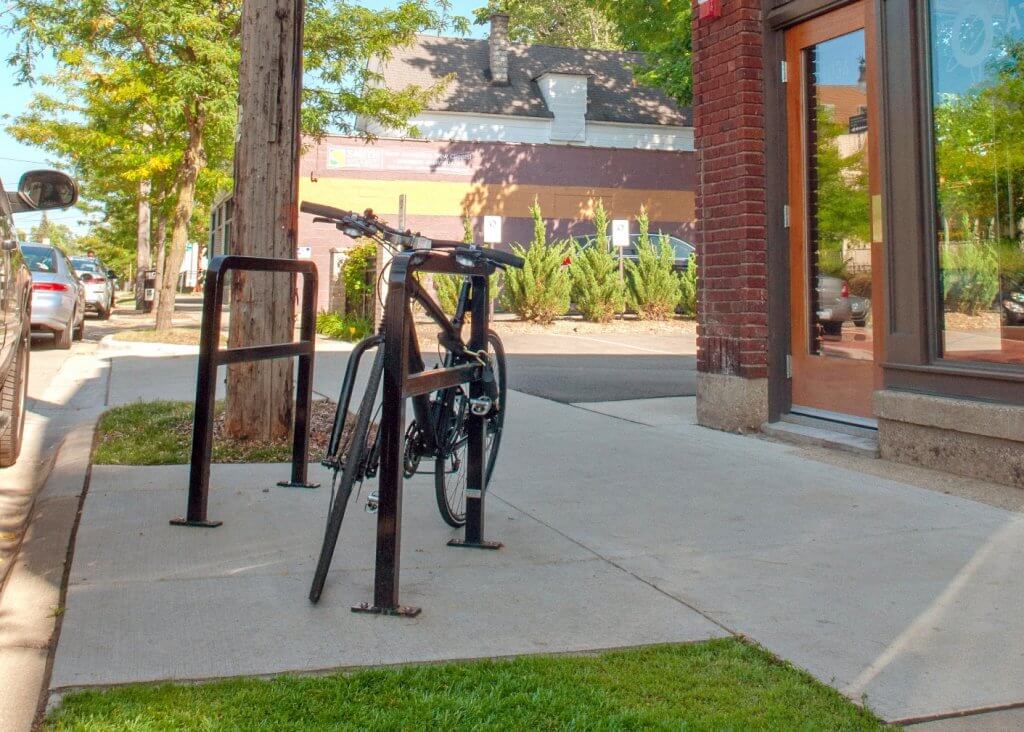
For short-term parking, where open-air racks make sense (storefronts, transit stops, plazas, school entrances) the key is a rack that provides genuine security and accommodates varied frame geometries, including the thick frames common on e-bikes.
CycleSafe’s Staple Rack is the standard recommended for high-vandal areas. The 2-inch square steel tubing with crossbar design lets riders secure both the wheel and the frame on the 34-inch-wide frame, which is critical for heavier, more valuable e-bikes. It’s approved by the Association of Pedestrian and Bicycle Professionals and meets government standards for Class II short-term parking. It accommodates two bikes per unit, and its uniform design allows more bikes to be parked per square foot than wave-type alternatives. Available in in-ground, surface mount, or rail configurations, it’s a flexible baseline solution for any facility that needs open-air parking to step up its game.
Also Worth Considering: The Cargo Bike Dock
For facilities that specifically need to designate open-air parking for cargo bikes, bakfiets, and large trikes, the Cargo Bike Dock is a purpose-built rack option available through CycleSafe. At 73 inches long with a low-profile design, it accommodates two cargo bikes per unit while actively discouraging standard bikes from occupying the space — keeping dedicated cargo bike spots available for the riders who need them. Its standout feature is an articulating lock bracket that hinges into multiple positions, allowing riders to use a standard U-lock or cable lock to reach the bike’s actual locking points — no awkward reaching or compromised security. The galvanized finish holds up to outdoor exposure, and the rack is made in the USA. If your site is seeing consistent cargo bike traffic and you want a clearly designated solution that doesn’t require a locker footprint, the Cargo Bike Dock is a practical open-air option to have in the mix.
For Long-Term and Secure Storage: The Cargo Bike Locker
For commuters, residents, or employees who leave their bikes for hours at a time, a standard bike locker isn’t enough if that bike is a cargo bike.
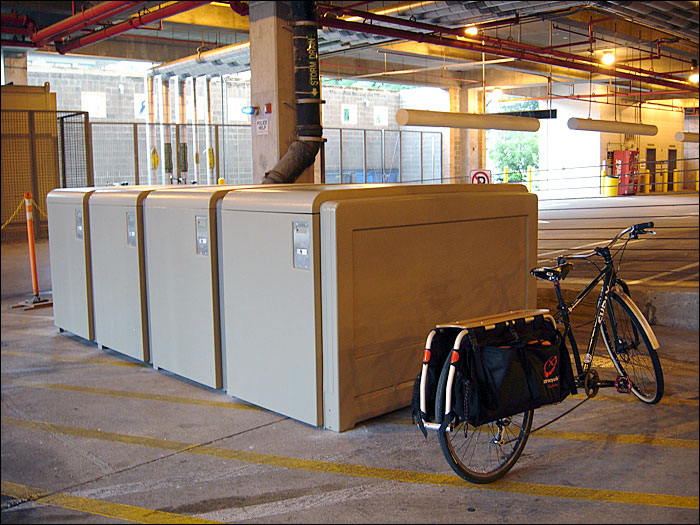
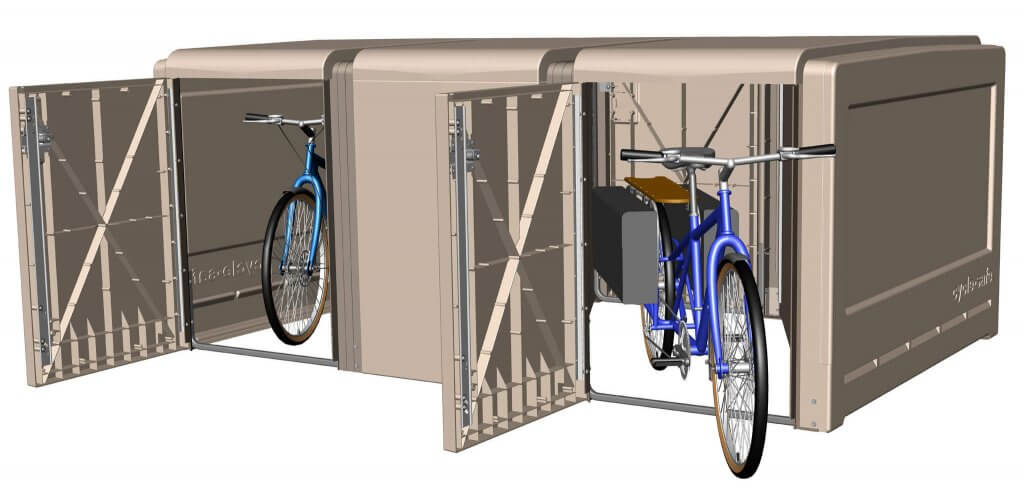
CycleSafe’s Cargo Bike Locker is a purpose-built variation of the ProPark locker designed specifically for extended wheelbase bikes, cargo bikes, and recumbents. Where a standard bike is roughly 67 inches long, a cargo bike can run 87 inches or more, the CycleSafe Cargo Bike Locker is engineered around that reality.
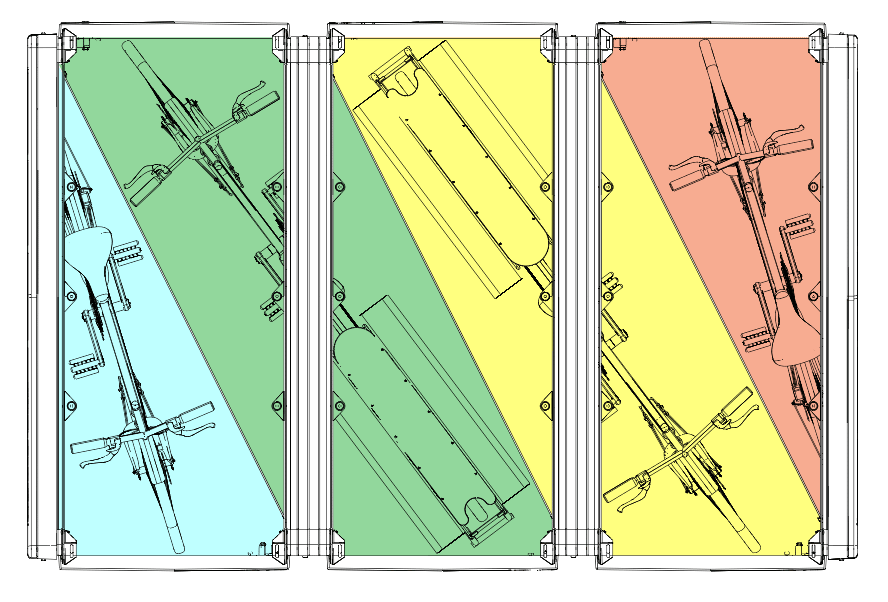
The design uses a 3-unit modular configuration: two extended stalls (created by removing the interior side panel of adjacent lockers to form a parallelogram bay) accommodate cargo and extension bikes, while the end units handle standard bikes. The result is a mixed-capacity installation that serves your whole user base.
Key Features Include:
- Modular design: Expandable in rows as demand grows.Existing standard lockers can be retrofitted to Cargo Bike configuration.
- Reversible: Easily converted back to standard floor plan if needs change.
- Mechanical and electronic lock options, including Bluetooth cellular access and keypad/RFID for managed access programs.
- Available with an electrical outlet kit for e-bike charging (see below).
This is the solution for transit agencies, apartment complexes, corporate campuses, and any high-use facility where cargo and e-bike riders need long-term, secure, weatherproof storage.
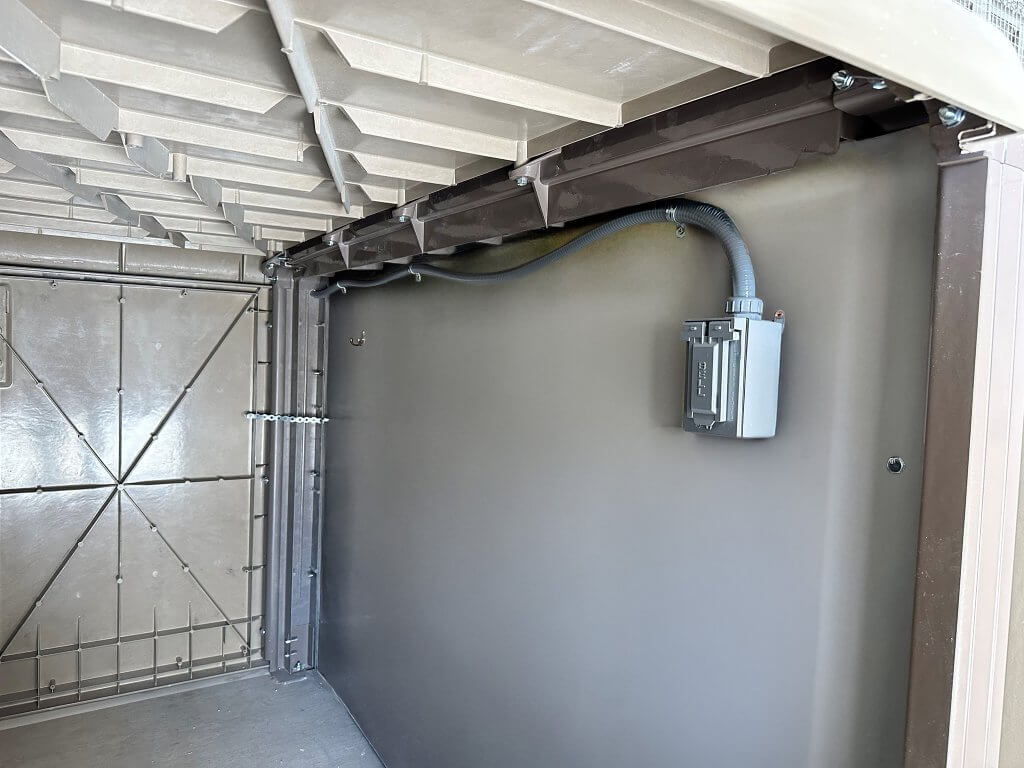
For E-Bike Charging: The PowerPro GFI Electrical Outlet Kit
The conversation about e-bike parking is incomplete without addressing charging. Riders who commute by e-bike — especially on cargo bikes with larger battery packs — need to charge during the day. That’s not a nice-to-have; for many riders it’s the difference between e-biking and driving.
CycleSafe’s PowerPro GFI Electrical Outlet Kit transforms a ProPark bike locker into a dedicated e-bike charging station. The kit includes a 20-amp GFCI outlet in a weatherproof, UL-rated enclosure, which is the same standard used for outdoor electrical applications.
Key Details:
- Weather-resistant design protects connections from rain and temperature swings.
- Available for both new locker installations and retrofit onto existing ProPark lockers.
- A timer is included for up to 4 hours of charging, reducing the risk of overcharging batteries.
- Installation must be performed by a licensed electrician per local codes.
The charging question is only going to become more pressing. As e-bike adoption grows and battery sizes increase — mainstream cargo e-bikes now ship with 500–800Wh packs — the expectation of a charge option will become as standard as expecting a power outlet at a hotel room desk. Facilities that get ahead of this now will be positioned to attract the growing base of e-bike commuters rather than frustrate them.
Planning Considerations for 2026 and Beyond
If you’re spec’ing new bike parking or retrofitting existing infrastructure, here are the practical questions to ask:
What’s the mix of bikes you’re actually seeing? A downtown office with courier-heavy tenants will see different bikes than a suburban school. Audit the actual bikes arriving before writing specs.
Are your lockers long enough? If you’re installing standard-length lockers without considering cargo bikes, you may be building infrastructure that alienates a fast-growing segment of cyclists in your community.
Have you planned for charging? For any installation serving commuters, transit riders, or residents, at least a portion of locker capacity should include electrical access. The demand is already there and growing.
Is your rack design compatible with heavier bikes? Thin-tube or wave-style racks may not provide adequate support for e-bikes in the 60–100 pound range. A robust staple-style design with frame and wheel contact points is a stronger choice.
What does your space plan look like for larger bikes? Cargo bikes need wider aisle clearance and more footprint per stall. Tight rack spacing designed for traditional bikes will result in cargo bike riders parking elsewhere or not cycling at all.
Every facility is different — rack spacing, locker capacity, charging infrastructure, and available footprint all factor into the right solution. Reach out and we’ll help you spec a bike parking plan that’s built for the bikes showing up at your facility.
The Bottom Line
The e-bike and cargo bike boom isn’t a future trend — it’s the current reality, and the infrastructure hasn’t kept up. Cargo e-bikes are the fastest-growing segment in the North American bicycle market. Families are replacing car trips. Commuters are upgrading to heavier, more expensive bikes that demand better parking. And the charging question is becoming unavoidable.
The good news is the solutions exist right now. A well-spec’d combination of robust short-term racks, cargo-capable lockers, and integrated charging infrastructure doesn’t just serve today’s riders — it positions your facility for the next decade of cycling growth.
Have cargo bikes showing up at your facility and nowhere appropriate to park them?
Request a quote or contact our team to talk through the right solution for your space.
Related Resources
- Compression-molded SMC Composite Bike Lockers
- ProPark® System Bike Lockers
- Modular Bike Locker
- Modular Bike Lockers: Scalable Infrastructure with Long-Term Lifecycle Advantage
- Characteristics of a Well-Designed Bike Locker Installation
Resources:
Market data cited in this post is drawn from several 2025–2026 industry research sources. North American and Canadian e-bike market size and growth projections are sourced from Mordor Intelligence’s North America E-Bike Market and Canada E-Bike Market reports. Cargo e-bike market figures come from Fortune Business Insights’ Electric Cargo Bike Market report. U.S. e-bike market projections are drawn from Grand View Research and GM Insights’ U.S. E-Bike Market analysis. The cargo/utility segment growth rate (20.98% CAGR) is from Mordor Intelligence’s North America analysis. Trend data on family cycling and cargo bike adoption patterns is sourced from Regen Tech’s 10 Major Cargo Bike Trends report and United Mobility’s Top 10 Electric Cargo Bike Market Trends in 2026. Bike dimension references are drawn from CycleSafe’s Cargo Bike Locker product specifications and Urban Arrow’s published technical documentation.
