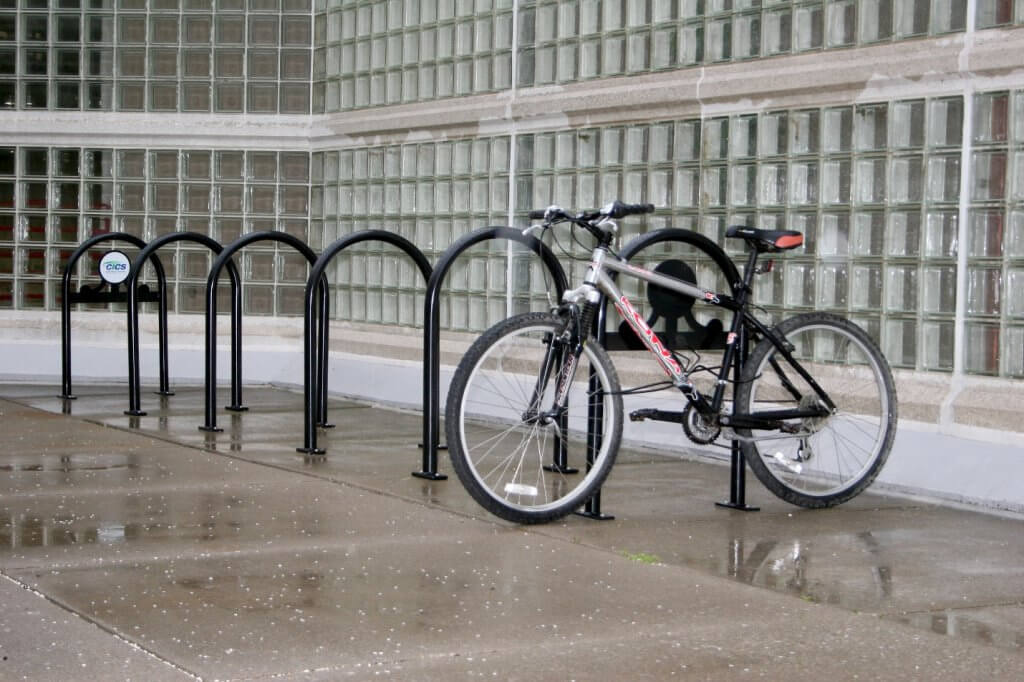
If you’re a city planner, nonprofit advocate, school administrator, or transit agency trying to expand bike parking in your community, you may be sitting on more funding opportunity than you realize. Bike parking, racks, covered shelters, secure lockers, and service stations at transit hubs, are explicitly eligible under a surprising range of federal and state grant programs. Here’s a comprehensive breakdown of what’s available in 2026 and how to pursue it.
Why Bike Parking Qualifies as Infrastructure
Bike parking isn’t just a convenience feature. Federal transportation law recognizes it as a legitimate piece of active transportation infrastructure. The FHWA’s Pedestrian and Bicycle Funding Opportunities table, the authoritative guide to what federal programs cover, explicitly lists “bicycle storage or service centers (e.g. at transit hubs) including charging stations” as an eligible activity across more than a dozen federal programs. That’s the green light communities need to start writing applications.
From bike racks and shelters to secure lockers and charging stations, every CycleSafe product is designed to meet federal eligibility standards for programs like TAP, STBG, and CMAQ. If you’re building a grant application, start here.
Federal Grant Programs: The Major Players
1. Transportation Alternatives Program (TAP)
The TAP, officially called the Transportation Alternatives Set-Aside, is the most direct federal funding pathway for bike parking projects. It was originally created under MAP-21 in 2012 and has been reauthorized and significantly expanded through the Bipartisan Infrastructure Law (IIJA). Under the IIJA, TAP funding grew by 76 percent, rising from roughly $850 million annually to nearly $1.5 billion by 2026, making it the largest percentage increase of any transportation program in the bill.
TAP covers a wide range of smaller-scale, non-motorized transportation projects: pedestrian and bicycle facilities, recreational trails, safe routes to school projects, and community improvements. Bike parking at schools, including bicycle parking facilities at public schools, is explicitly called out as eligible under the Safe Routes to School component of TAP. Similarly, bike parking at transit stations and public spaces fits squarely within the program’s active transportation mandate.
TAP funds cover up to 80% of eligible project costs, with applicants generally required to provide a 20% local match. States run their own competitive application cycles; several are actively open or recently closed in 2026. For example, Arkansas opened its 2026 TAP cycle with a deadline in late April, and the Puget Sound Regional Council had approximately $16 million available through its 2026 TAP process. Colorado anticipates a new call for projects in Fall 2026.
Who can apply: Local governments, counties, metropolitan planning organizations (MPOs) in urbanized areas with populations of 200,000 or fewer, and other regional governmental entities with transportation oversight responsibilities. Nonprofits may participate as partners but typically cannot be the direct project sponsor.
How to apply: Contact your state DOT or regional MPO. Every state administers its own TAP process, and deadlines vary by region.
2. Surface Transportation Block Grant Program (STBG)
The STBG is arguably the most flexible federal transportation funding source available. It’s a formula program, not a competitive grant, meaning states receive annual allocations and then distribute funds to MPOs and local areas based on population. STBG funding grew by 32 percent under the IIJA, reaching nearly $15 billion annually by 2026.
Bike parking and micromobility infrastructure are directly eligible under the STBG. The IIJA strengthened this by explicitly adding shared micromobility to Section 217 of Title 23, the federal statute covering bicycle and pedestrian projects. Under this provision, STBG funds can support shared micromobility stations and docking infrastructure, as well as conventional bike parking. Because STBG is so broadly applicable, bike parking projects are often best positioned as part of a larger streetscape, trail, or transit access project rather than standalone applications.
Who can apply: Projects must be accessed through your state DOT or regional MPO, not through a single federal application. Reach out to your MPO to understand regional call-for-projects timelines and priorities.
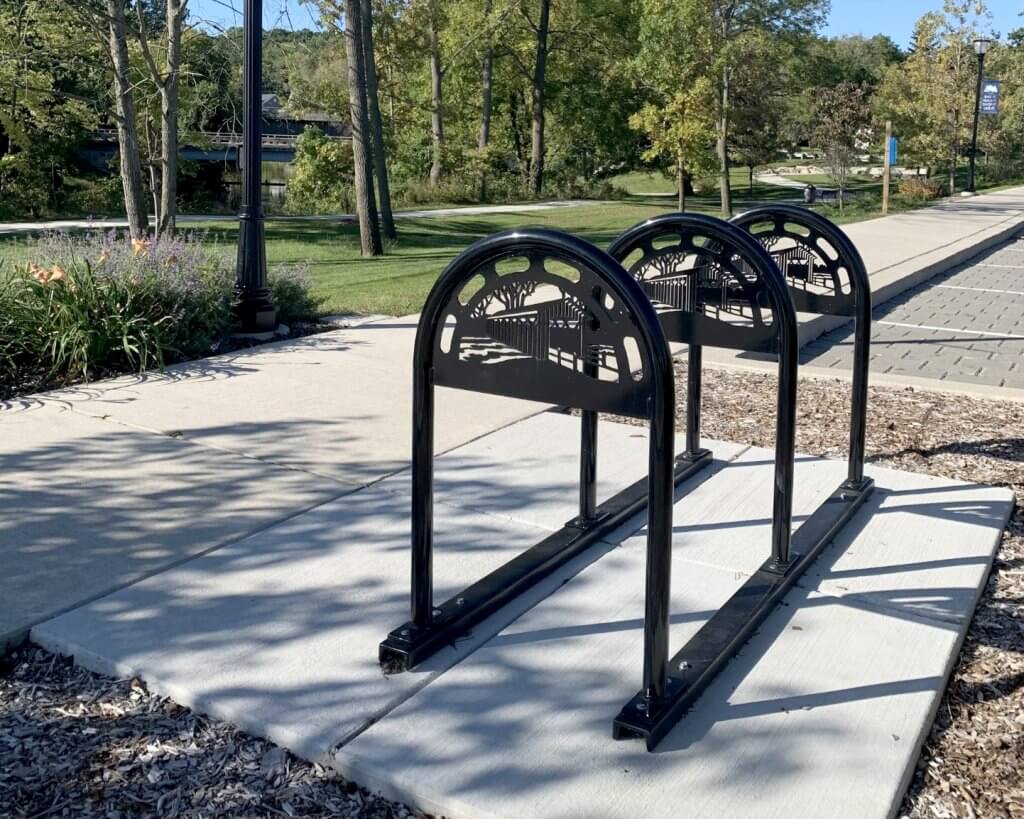
3. Congestion Mitigation and Air Quality Improvement Program (CMAQ)
CMAQ funds projects that reduce traffic congestion and improve air quality in areas that don’t meet national ambient air quality standards. Bike parking fits within this program when it can be tied to emissions reduction, for example, as part of a transit access improvement that encourages more people to bike to bus or rail stations rather than drive.
CMAQ funding grew approximately 10 percent under the IIJA, reaching about $2.745 billion annually by 2026. The IIJA also expanded CMAQ eligibility to explicitly include shared micromobility projects such as bike-share infrastructure, opening the door to e-bike charging stations paired with parking facilities.
Key requirement: Projects must demonstrate a measurable reduction in vehicle emissions. Bike parking infrastructure alone may face a higher bar here; pairing it with a broader mode-shift or transit-access argument strengthens eligibility significantly.
4. Carbon Reduction Program (CRP)
The CRP is a newer formula program created by the IIJA specifically focused on reducing transportation-related carbon emissions. It’s administered through MPOs and state DOTs, and bicycle facility projects, including parking, are among the eligible uses. Several regional planning organizations, including the Knoxville Regional TPO, have made CRP funds available alongside STBG-TA and CMAQ in their 2026 calls for projects.
Best use case: Bike parking tied to transit-oriented development or commuter access to public transportation, where the emissions reduction argument is strong.

5. RAISE Grants (formerly BUILD/TIGER)
The RAISE (Rebuilding American Infrastructure with Sustainability and Equity) grant program is a competitive discretionary grant administered directly by the U.S. Department of Transportation. It funds innovative, multimodal transportation projects with broad community impact. Bicycle and pedestrian infrastructure, including bike parking as part of a broader active transportation network, is eligible.
RAISE is best suited for larger, more complex projects rather than standalone bike rack installations. If your community is planning a major active transportation corridor, transit hub, or complete streets project, embedding bike parking within that proposal can make excellent use of RAISE funds. The program has awarded more than $350 million toward bicycle and pedestrian projects through its predecessor programs since 2009.
Who can apply: States, local and tribal governments, transit agencies, and metropolitan planning organizations.
6. Safe Routes to School (SRTS)
Although dedicated SRTS federal funding ended in FY2012, SRTS-eligible projects remain supported through both the TAP set-aside and STBG. Bike parking at K–12 schools, covered shelters, secure lockers, or basic racks, is a textbook SRTS project. Schools and school districts should explore whether their state DOT has an active SRTS program drawing from these funding streams.
7. FTA Transit-Oriented Development (TOD) Planning Grants
For communities thinking bigger, the Federal Transit Administration’s TOD Planning Grant program supports planning efforts to improve safe access to public transportation, including for cyclists. While these funds are specifically for planning (not capital construction), they can lay the groundwork for funded bike parking at transit stops and stations down the line.

State-Level Programs Worth Watching
Federal programs are the funding backbone, but state-level programs often provide more accessible, lower-barrier pathways, especially for smaller communities and organizations.
North Carolina runs a 2026 Multimodal Planning Grant Program, administered by NCDOT, that supports comprehensive bicycle and pedestrian plans at the municipal level. While it funds planning rather than construction, a strong plan opens doors to state and federal capital funding.
Minnesota’s Active Transportation Program, established in 2018, provides competitive grants to local agencies for engineering studies, education programs, and infrastructure investment in biking and walking.
California offers multiple pathways, including the Clean Mobility Options program (administered by the California Air Resources Board), Community Development Block Grants (CDBG), and the Per Capita Grant Program, which supports park and recreational facility acquisition and development, including bike paths.
Community Development Block Grants (CDBG), available nationwide through HUD, are an often-overlooked option. CDBG entitlement grants can fund bicycle and pedestrian facilities in eligible communities, particularly in lower- and moderate-income areas.
Practical Tips for Applicants
Pair bike parking with transit access. Projects that connect cyclists to buses or rail stations are almost always stronger candidates across all programs, because they demonstrate multimodal connectivity and emissions reduction.
Quantify the benefit. Estimate how many cyclists will use the facility, how many car trips will be replaced, and what emissions reductions could result. Federal reviewers reward concrete, measurable outcomes.
Check your MPO’s active solicitations. Many regional planning organizations have calls for projects open right now for FFY 2026–2028. The window is narrow in some regions, so contact your MPO immediately if you haven’t already.
Consider phasing. Several programs allow applicants to fund design in one fiscal year and construction in the next. This can reduce the upfront financial burden and improve project readiness scores.
Match matters. Most federal programs require a 20% local match. Start identifying your match source early, it can be local government funds, state dollars, or even private contributions in some cases.
Ready to move forward on a bike parking project? Get in touch and we’ll help you spec the right solution for your space, your budget, and your grant requirements.
The Bottom Line
2026 is a strong year to pursue bike parking funding. The Bipartisan Infrastructure Law significantly increased funding across TAP, STBG, and CMAQ, the three programs most directly relevant to bike infrastructure, and many of those dollars are still being programmed and obligated at the regional and state level. If you’ve been sitting on a bike parking project, the funding landscape has never been more favorable.
The key is to start locally: Reach out to your state DOT and regional MPO to understand which programs are active in your area, what their timelines look like, and how your project can align with existing transportation plans. Bike parking may seem like a small ask, but the grants that can fund it are anything but small.
Related Resources
- Bike Parking by Project Type
- Bike Parking Layout and Design Dimensions
- Bike Parking Guidelines
- How to Choose a Bike Locker
- Campus Bike Parking: Trends, Challenges & Forward-Thinking Solutions for a Safer, Smarter Campus
- Modular Bike Lockers: Scalable Infrastructure with Long-Term Lifecycle Advantage
Resources:
U.S. Department of Transportation FHWA Pedestrian and Bicycle Funding Opportunities table; League of American Bicyclists Federal Resources; Rails-to-Trails Conservancy; Chicago Metropolitan Agency for Planning IIJA Update; North American Bikeshare and ScooterShare Association (NABSA); state DOT program pages for Arkansas, Colorado, North Carolina, and others.
