
Plan secure, coordinated bike parking for the places students, faculty, staff, residents, commuters, and visitors move through every day—from academic cores and residence halls to parking structures, transit connections, and recreation facilities.
CycleSafe helps campus planning, transportation, facilities, housing, procurement, and design teams select and coordinate university and college bike parking solutions for each environment while supporting long-term standards, stewardship, and campus mobility goals.
Discuss your campus environments, user needs, security priorities, and future plans with a CycleSafe specialist.
Just Some of the Universities that Rely on CycleSafe

























Bike Parking Is Recurring Campus Mobility Infrastructure
On a college or university campus, bike parking is not an isolated amenity. It is infrastructure used repeatedly across semesters, academic years, and capital-planning cycles. The same systems must serve daily movement, commuter arrivals, overnight residential storage, transit connections, recreation, events, and changing patterns of bicycle and e-bike use.
Common campus bike parking challenges—overcrowded racks, bicycles attached to railings or accessibility routes, abandoned bikes, weather exposure, residence-hall conflicts, and unmanaged charging—often point to a deeper planning issue. Campuses may lack a clear distinction between short- and long-duration parking, secure and open parking, or the needs of academic, residential, commuter, and public-facing environments.
A coordinated approach starts by defining who parks, for how long, where demand occurs, what level of security is appropriate, and who will manage the infrastructure over time. That planning foundation helps institutions move from reactive placement toward a campus-wide system.
Start with operational requirements and deployment environments—not a preselected product list.
One Campus. Different Stakeholders. One Coordinated Plan.
Bike parking crosses departmental boundaries. The planning challenge is to reconcile these perspectives before they become competing requirements during design, procurement, and construction. CycleSafe supports teams in translating campus priorities into clear use cases, deployment layers, security assumptions, and specification expectations.
| Stakeholder Lens | What the System Must Help Address |
| Campus planning | Campus standards, long-range growth, circulation, coordinated deployment and flexibility to redeploy. |
| Transportation / parking / mobility | Recurring mobility, commuter access, demand management, transit connections, and distribution. |
| Facilities / operations | Durability, maintenance, repairability, standardization, and stewardship. |
| Housing / residence life | Secure overnight and long-duration storage, resident access, space efficiency, and abandoned-bike management. |
| Safety / risk | Theft exposure, circulation conflicts, controlled access, and e-bike charging governance. |
| Procurement / capital projects | Clear operational definitions, specification survivability, lifecycle rationale, and consistent implementation. |
| Architects / specifiers | Integration with site and building design, capacity, accessibility, security, and implementation intent. |
| Students | Whether the system is convenient, understandable, and secure. |
Build a Campus-Wide Deployment Hierarchy
Successful campuses rarely rely on one solution type. They match parking duration, user behavior, security, capacity, weather exposure, and operational ownership to each campus environment—then connect those decisions through shared standards.
Academic Core
High-volume, short-duration parking near destinations. Prioritize visibility, convenience, circulation, accessibility, and appropriate capacity. Planning response: Strategically placed campus bike racks, with campus bike shelters or other covered parking where exposure or demand warrants it.
Residence Halls & Student Housing
Overnight and long-duration storage for recurring residents. Address theft concerns, weather, access, space, turnover, e-bike charging, and abandoned bikes. Planning response: Campus bike lockers, controlled campus bike rooms, wall-mounted or high-density bike racks, and governed, credentialed access.
Parking Structures & Campus-Edge Commuter Areas
Longer-duration storage for commuters connecting to campus destinations. Planning response: Secure lockers, credentialed systems where justified, charging capabilities, bike rooms, and high-density layouts.
Transit Hubs & Shuttle Stops
Parking that connects bicycle travel with transit or campus shuttle networks. Planning response: Secure long-duration storage and convenient short-duration parking matched to transfer behavior.
Student Centers & Public-Realm Nodes
Highly visible, high-turnover parking where placement and circulation strongly influence use. Planning response: Accessible, strategically distributed rack systems and covered options.
Recreation & Athletics
High-turnover demand from students, visitors, and event users, sometimes with peaks or specialty bicycles. Planning response: Visible racks, shelters, and capacity planned for actual use patterns.
Bike Rooms & Constrained Interiors
Protected, space-efficient storage with clear circulation and management requirements and e-bike charging. Planning response: Vertical, horizontal, and high-density configurations and interior lockers selected for the room and user population.
Learn how to plan a campus bike parking system that can grow over time.
Make the Right Behavior the Easy Behavior
When parking is inconvenient, hard to find, poorly distributed, or perceived as insecure, users improvise. Bicycles may appear on fences, railings, trees, stairwells, or circulation routes, while underused infrastructure remains elsewhere. Better compliance begins with infrastructure that reflects how people actually move.
Placement, visibility, lighting, wayfinding, capacity, access, and security should work together. For recurring campus populations, consistent standards and a recognizable parking hierarchy can reduce confusion and make the intended choice more obvious across campus zones.
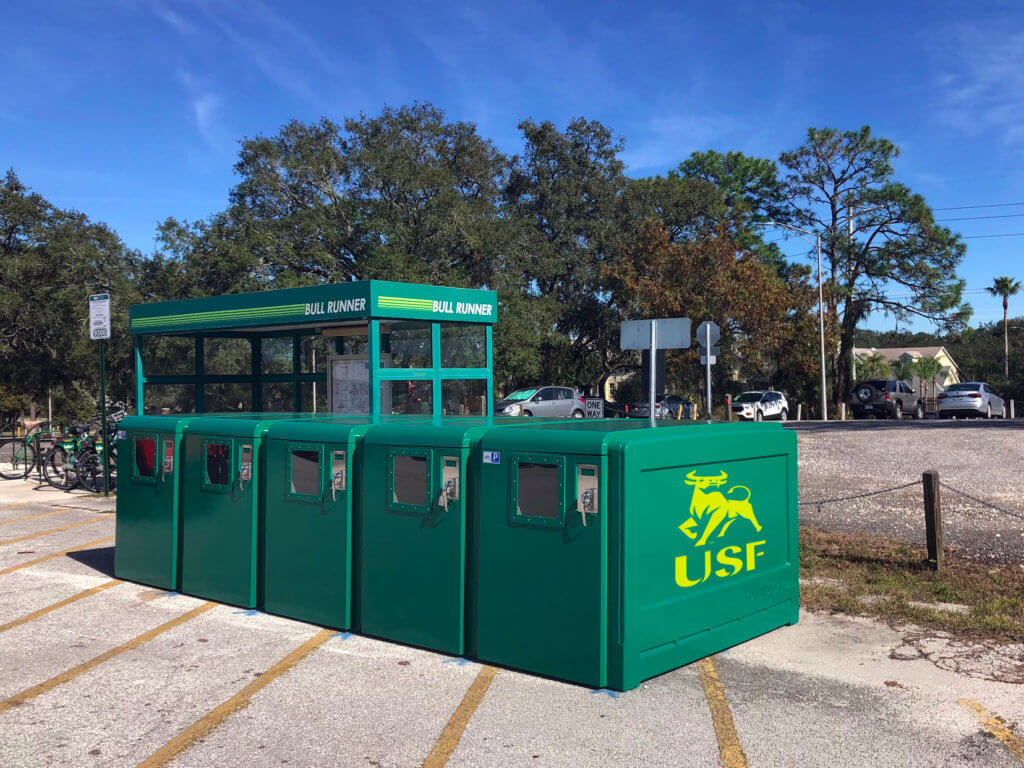
Campus Bike Lockers and Secure Storage by Duration and Risk
Not every bicycle requires the same parking environment. Short visits near academic or public destinations may call for visible Class II parking. Commuters, residents, high-value bicycle owners, and users leaving bikes for longer periods may need Class I storage with greater protection from theft, vandalism, and weather.
The distinction matters most where residence-hall needs have been treated like visitor parking or where isolated racks are expected to solve theft and overnight-storage concerns. CycleSafe can help define the appropriate campus bike lockers, controlled bike rooms, or other secure campus bike storage approach—including the security level, access model, enclosure, capacity, and location appropriate to each use case.
Discuss lockers, controlled bike rooms, access approaches, and long-duration campus needs.
Treat E-Bike Charging as an Operational Governance Decision
Growing e-bike use adds new questions: Where should charging occur? Who can access it? How will policies be communicated and enforced? How should residence-life, facilities, transportation, and safety teams share responsibility?
The governing issue is not technology for its own sake. It is operational continuity in a recurring-use environment. Designated storage and charging, clear policy, user education, controlled access where appropriate, and defined stewardship should be considered together. CycleSafe can help teams evaluate secure storage and charging configurations within a broader campus plan.
Use Smart Access Where It Improves Campus Operations
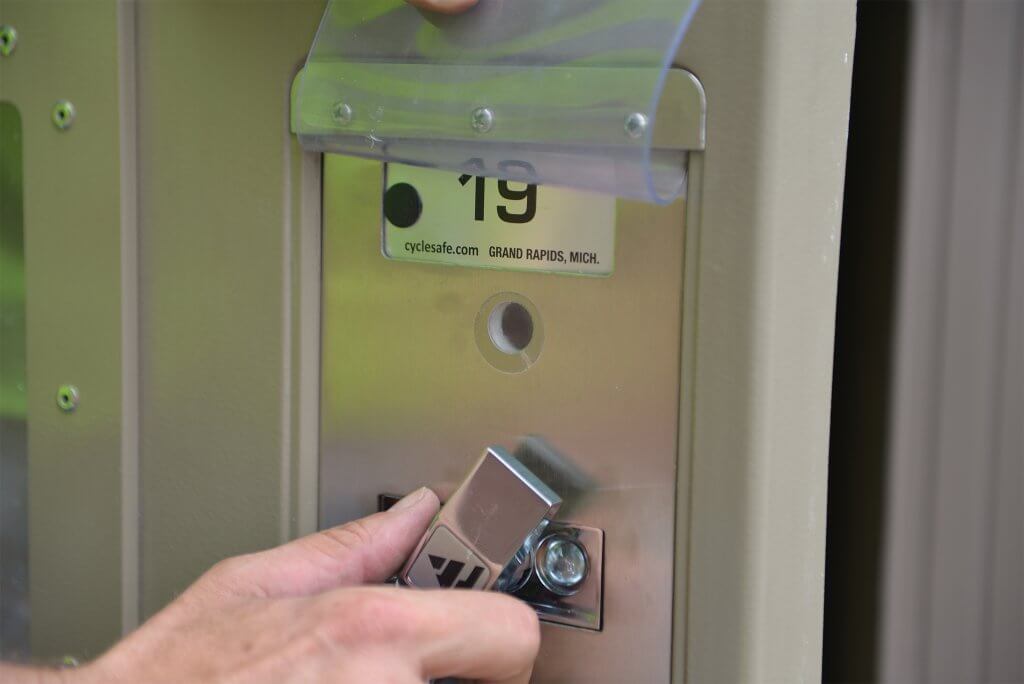
Credentialed or digitally managed Smart Bike Parking™ access may be appropriate for residence-hall storage, commuter programs, reservations, utilization visibility, or distributed infrastructure management. It should be introduced where it supports a defined operating model—not simply because connected technology is available.
For institutions with existing credential ecosystems, the planning conversation may include user eligibility, administrative oversight, continuity across campus zones, reservation or assignment workflows, and future upgrade paths. The physical system, access method, and operating responsibilities should be designed as one coordinated system.
Design for Lifecycle Stewardship—Not Just Installation Day
Campus infrastructure must continue performing after the project team moves on. Facilities and operations teams inherit maintenance, repairs, user questions, replacement decisions, access administration, and the effects of inconsistent standards. Lifecycle planning therefore belongs in the initial project definition.
Strong campus standards can clarify approved solution types, appropriate deployment environments, material and performance expectations, replacement parts, access assumptions, installation requirements, and expansion logic. This helps preserve the intended hierarchy as projects move through procurement, value engineering, contractor interpretation, and phased implementation.
Where demand or budgets will evolve, modular bike parking infrastructure and phased deployment can preserve flexibility. A system may begin at one node, expand as use grows, or be reconfigured as campus priorities shift. The goal is infrastructure continuity: future additions should reinforce the campus strategy instead of becoming disconnected, mismatched deployments.
Protect operational intent through site planning, product selection, documentation, and implementation.
Campus Bike Lockers, Racks, Shelters, Bike Rooms & Repair Stations
Products enter the conversation after the use case is defined. CycleSafe’s campus bike lockers, bike racks, bike shelters, bike room systems, high-density bike parking, and repair stations can be combined across campus environments rather than treated as stand-alone categories.
| Solution Family | Best-Fit Campus Role | Planning Considerations |
| Campus Bike Lockers | Secure Class I, long-duration or overnight storage near residence halls, commuter areas, and transit-linked nodes. | Security, access, assignment or reservation, weather, modular expansion, specialty-bike accommodation, and charging where governed. |
| Campus Bike Racks | Visible Class II, short-duration parking near academic, public, recreation, and student-life destinations. | Placement, spacing, circulation, accessibility, bicycle support, finish, capacity, and campus standards. |
| University Bike Shelters | Covered parking where weather protection improves usability. | Rack selection, capacity, runoff, side panels, sightlines, graphics, and site integration. |
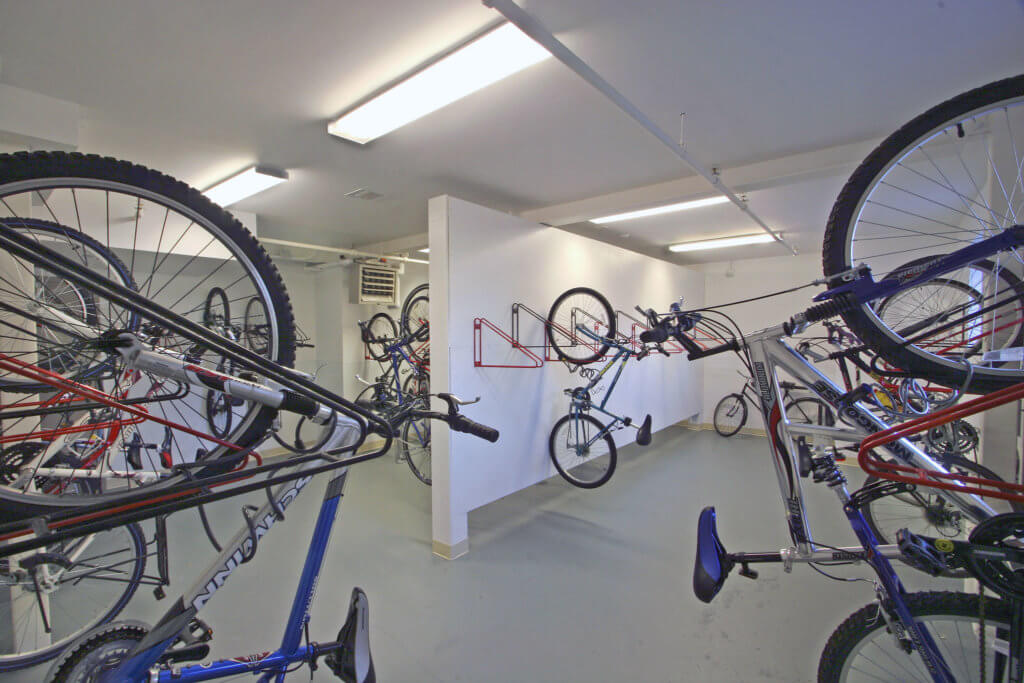
| Campus Bike rooms | Protected, higher-capacity interior storage for housing, parking structures, and other managed campus environments. | Room geometry, access, aisle clearances, vertical/horizontal mix, turnover, cleaning, and management. |
| High-Density Bike Parking Systems | Capacity in constrained university bike rooms or parking structures. | User capability, lift/clearance, aisle space, alternating layouts, and specialty bicycles. |
| Campus Bike Repair Stations & Pumps | Self-service tools and inflation that support the campus cycling environment. | Visibility, weather, vandal resistance, service expectations, and placement near mobility nodes. |
Institutional Experience and Proof
CycleSafe products are represented at colleges and universities across North America and internationally, including the University of Washington, University of Minnesota, University of Nevada Reno, Wesleyan University, Ball State University, Michigan State University, Stanford University, Rutgers University, University of Michigan, University of Wisconsin, and others.
“The University of Washington has been buying CycleSafe lockers since 1981, and we have never found a better constructed or more secure bike locker on the market.“
The higher education case studies also describe lockers installed at 15 locations across three University of Minnesota campuses; a designated WallRack bike room in each of Wesleyan University’s Fauver Hall residence buildings; and rows of 24 lockers serving Ball State University student housing. These examples illustrate distributed deployment, residence-life integration, and long-term institutional use without replacing the need for project-specific planning.
Plan From the Campus System Outward
Whether the trigger is a campus master plan, residence-hall modernization, recurring theft, transportation demand management, transit integration, a new capital project, or a campus standardization effort, the strongest time to define bike parking is early—before operational requirements are compressed into a furnishing schedule or isolated product request.
CycleSafe can help your team evaluate users, duration, security, capacity, access, charging governance, deployment hierarchy, lifecycle requirements, and future expansion across the campus.
Bring your campus environments, pain points, drawings, standards, or early-stage questions. We’ll help translate them into a coordinated infrastructure plan.
Related Resources
- Planning Bike Parking for Higher Education Campuses
- Smart Bike Parking™ and Credentialed Access for Higher Education
- Campus Bike Parking: Trends, Challenges & Forward-Thinking Solutions for a Safer, Smarter Campus
- Promote Sustainable Campuses — University of Minnesota, University of Nevada Reno, Wesleyan University, and Ball State University
- CycleSafe: Elevating Campuses with Sustainable Transportation
- From 10 Lockers to 100: Scaling Modular Bike Parking Infrastructure Over Time
- Bike Parking Dimensions
- Features of a Successful Indoor Bike Room Design
- How to Choose a Bike Locker
- Smart Bike Parking™ and Mobility Hubs
- ProPark® System Bike Lockers
University and College Bike Parking Installations
CycleSafe bike lockers and bike parking systems are installed numerous on college and university campuses throughout North America and the world. Here are just a few of the higher education organization that trust CycleSafe.
- Ball State University
- California State University
- Ellisville State School
- McMaster University
- Michigan State University
- Oregon Health and Science University
- Rutgers University
- Sacramento State University
- San Francisco State University
- Stanford University
- State University of New York
- UC Santa Barbara
- University of Alberta
- University of Arizona
- University of Edinburgh
- University of Iowa
- University of Michigan
- University of Minnesota
- University of Nevada, Reno
- University of Oregon
- University of San Francisco
- University of Texas
- University of Vermont
- University of Washington
- University of Waterloo
- University of Wisconsin
- Wesleyan University