
As cycling tourism grows and more guests travel with high-value bicycles and e-bikes, expectations around secure bike storage are evolving. For hotels and hospitality properties, bike parking is no longer just a physical amenity—it is part of a broader, connected guest experience.
Smart Bike Parking™ introduces digital access, system integration, and operational visibility into what has traditionally been a static infrastructure element. When implemented effectively, it improves both the guest experience and the efficiency of hotel operations.
What Makes Bike Parking “Smart” in Hospitality Environments?
Smart Bike Parking refers to infrastructure that combines secure physical design with digital connectivity and system integration—transforming bike storage from a standalone amenity into part of a broader operational ecosystem.
- Secure physical design
- Digital access systems
- Integration with broader property or mobility systems
For hotels, this most often means enabling credentialed access to bike lockers using existing guest systems, such as room key cards or mobile credentials.
Instead of requiring separate keys, codes, or manual staff involvement, guests can access secure bike storage using the same credentials they already use throughout their stay. This reduces friction for guests while aligning bike storage with the rest of the hotel experience.
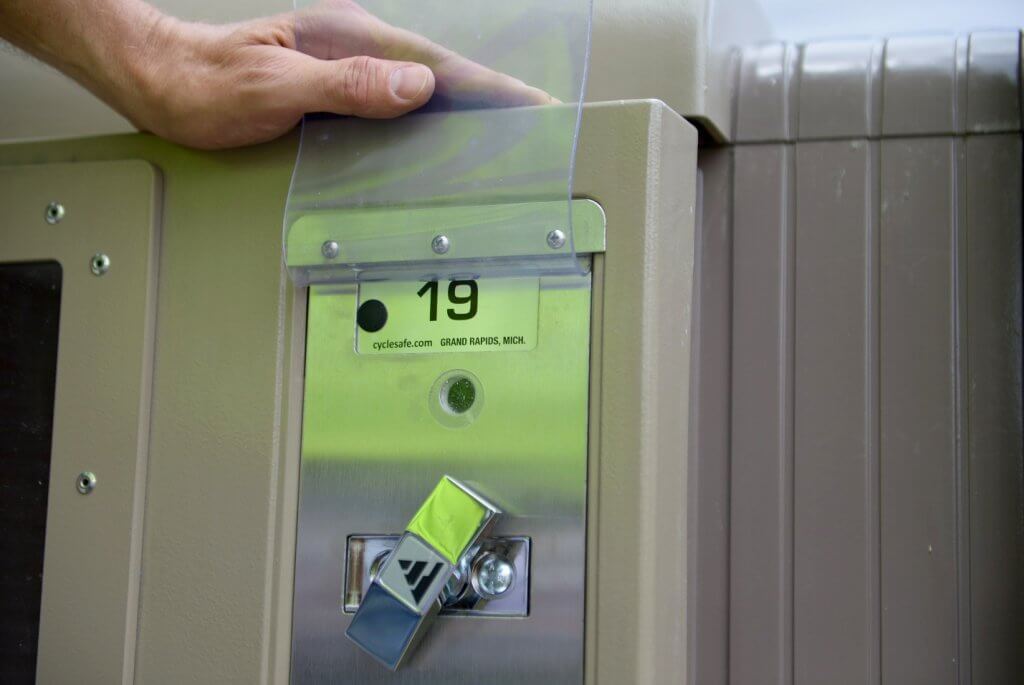
See how credentialed access, system integration, and modular lockers work together in real hospitality environments.
Credentialed Access: Integrating Bike Storage with Hotel Systems
One of the most impactful advancements in hospitality bike parking is the ability to integrate locker access with hotel room key systems.
With credentialed access:
- Guests unlock bike lockers using their room key cards
- Mobile credentials or apps can also be used
- Access can be time-bound to the duration of a stay
- No additional keys or lock management is required
This approach allows bike storage to function as a natural extension of the guest journey—from check-in to room access to amenity use—while simplifying operations and reducing administrative burden.
Operational Benefits for Hotels
Credentialed bike locker systems also provide meaningful operational advantages.
Reduced Staff Involvement
- No need to issue, track, or recover physical locker keys
- Fewer guest service interactions required for access
Improved Security Control
- Access can be assigned, monitored, and revoked digitally
- Eliminates risks associated with lost or duplicated keys
Streamlined Guest Experience
- Guests do not need to learn a new system
- Reduces friction during check-in and use
Cloud-Based Management and System Visibility
Smart Bike Parking systems can also connect to cloud-based platforms that provide real-time visibility into system performance, usage, and access.
These platforms can offer:
- Remote diagnostics and monitoring
- Usage tracking and utilization data
- Access management and user control
- System alerts and maintenance visibility
For hotel operators and facilities teams, this level of visibility translates into more informed decision-making. It enables teams to better understand demand, plan for expansion or reconfiguration, and reduce operational uncertainty—particularly in properties where usage patterns may vary by season or guest profile.
Interoperability and Future-Ready Infrastructure
As mobility systems evolve, hotels increasingly operate within broader transportation and access ecosystems. These may include:
- Transit systems
- Bike share programs
- Mobility hubs
- City-wide access platforms
To remain adaptable, bike parking infrastructure must be designed with integration in mind from the outset.
Smart Bike Parking systems that incorporate open APIs, credential interoperability, and flexible access technologies allow hotels to connect with these systems over time—without requiring full infrastructure replacement. This ensures that bike parking investments remain viable as mobility networks and user expectations continue to evolve.
Contactless Access and Payment Capabilities
Modern guests increasingly expect contactless, mobile-first interactions across all aspects of their stay—including amenity access.
Smart Bike Parking systems can support:
- Tap-to-access via mobile wallets
- App-based entry
- Contactless authentication
For properties offering paid bike storage or premium amenities, these systems can also enable digital payment integration and subscription or usage-based models. This flexibility allows hotels to align bike parking access with broader guest expectations while also supporting potential revenue models or premium service offerings.
Supporting the Full Range of Hospitality Use Cases
Smart Bike Parking is especially valuable in:
- Urban hotels with limited space and high demand
- Resorts and destination properties with cycling tourism
- Properties positioning themselves as cycling-friendly
- Mixed-use developments connected to transit or mobility hubs
Planning Considerations for Hotels and Hospitality Properties
Implementing Smart Bike Parking requires coordination across multiple stakeholders, each with different priorities.
- Operations teams focus on ease of use, guest experience, and minimizing staff involvement
- Facilities teams prioritize durability, reliability, and ease of maintenance
- Developers and ownership groups evaluate lifecycle cost, scalability, and long-term value
- Architects and Division 10 specifiers integrate systems into site and building design
Aligning these perspectives early helps ensure that bike parking systems perform effectively—not just at installation, but throughout the life of the property.
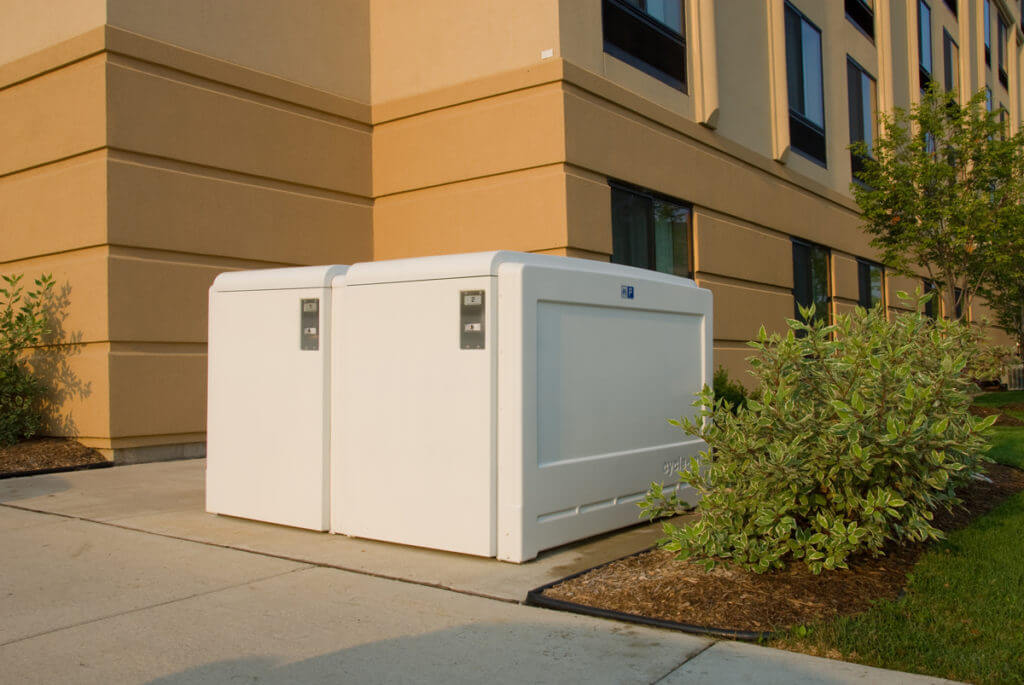
Retrofitting Existing Bike Lockers for Smart Access
For hotels and hospitality properties that already have ProPark® System bike lockers in place, Smart Bike Parking does not require a full replacement. The modular design of the ProPark System allows existing installations to be upgraded with smart access technologies, including credentialed entry using room key cards, mobile credentials, and other wireless or keyless options.
This retrofit capability enables properties to introduce digital access, improve operational control, and enhance the guest experience without removing or replacing existing infrastructure. By upgrading specific components rather than entire units, hotels can extend the value of their current investment while aligning bike storage with modern, connected hospitality systems.
For existing CycleSafe customers, these upgrades can often be implemented as part of a phased approach. Contact CycleSafe to explore how your current ProPark® System installations can be easily and economically retrofitted to support Smart Bike Parking and integrated access.
See how modular ProPark® systems enable upgrades, repairs, and expansion over decades—reducing replacement costs and supporting phased infrastructure planning.
From Amenity to Integrated Infrastructure
Smart Bike Parking transforms bike storage from a passive amenity into an integrated part of hospitality infrastructure.
It enables hotels to:
- Deliver a better guest experience
- Reduce operational friction
- Improve security and control
- Prepare for future mobility integration
For hospitality properties seeking to differentiate, support modern travelers, and operate efficiently, smart bike parking is no longer optional—it is a strategic advantage.
Every property is different, and the right approach to smart bike parking depends on your operations, guests, and infrastructure. Contact CycleSafe to discuss how credentialed access bike lockers can support your property’s goals.
Related Resources
- Bike Parking Solutions for Hotels & Hospitality Properties
- Secure Bike Storage for Cycling-Friendly Hotels
- Designing Secure Bike Parking for Hotels
- Modular Bike Lockers and Lifecycle Costs
- Smart Bike Parking™ & Mobility Hubs | Integrated Micromobility Solutions for Smart Cities
- ProPark® System Bike Lockers
